By Melissa Wynn
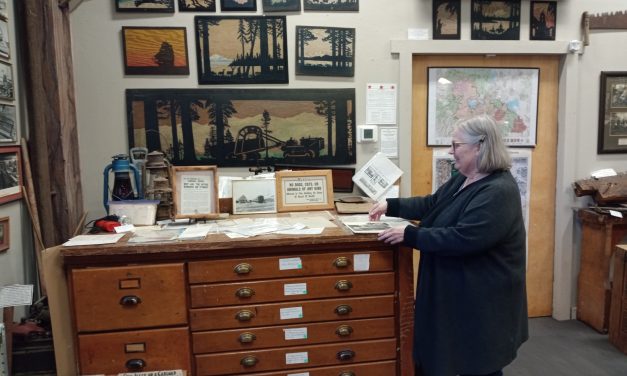
As we all become more and more aware of going green, I have paid more attention to what I throw in the wastebasket. It seems the simplest way to begin is to recycle. Not only does building this easy habit keep tons of garbage out of our landfills, it also puts a bit of a jingle in my pocket. During a recent visit to Bullseye Recycling, at 705-810 US 395 just outside of Susanville CA, I learned that I could be getting paid for a variety of things that never occurred to me to recycle. I always took in my aluminum cans and soda bottles, but did you know you can get paid for your old, dead car batteries? As long as the registration is current and you have a clear title, you can even take in a whole vehicle. Many plastic containers bring money but Bullseye also takes the ones with no CRV like your laundry soap bottles and milk jugs. Newspapers, cardboard and other paper products should be recycled as well. Save the planet, right? Don’t forget glass, old wire, scrap copper fittings and all the other metal type clutter that seems to breed in the garage. With just a few trips a year to your local recycle station you too can do your part in the nation wide effort to reuse and recycle. Call ahead to learn what your local station accepts. A few things on the NO list at Bullseye Recycling include electronics, styrofoam, motor oil and window glass. There are however other venues to safely dispose of these items as well. Our local landfill has special containers for the motor oil and electronics. As you go through your daily life think before you toss anything in the waste basket or dumpster. Can you reuse it? Can you get paid for it at recycle? Just add a can or two where you dump your trash and soon throwing that water bottle in the recycle can instead of the trash can will become second nature and no bother at all. Together we can change the world, one trash can at a time.
Share Mountain Valley Living with your friends:
$5,000 SEED MONEY FOR YOUR BUSINESS OR IDEA
First Ever California Business Plan Competition Starts at County Level
As part of a statewide effort to boost the economy and encourage entrepreneurs, the Business and Entrepreneurship Center at Feather River College (BEC) is announcing a business plan competition for anyone over the age of 14.
While the value of writing a business plan is often debated in the entrepreneurial community, studies have shown you are twice as likely to successfully launch or grow your business or be awarded funding if you have taken the time to write a solid business plan.
The plans for this contest must be based on an original idea for either a new business, a business in operation for less than two years, or a substantial improvement on an existing business.
First place at the county level will win $500 in each of three age groups: 14-17; 18-27; and over 28 years. These winners will be entered into the same age brackets at the California State competition for an opportunity to win an additional $5,000 in seed money for their business.
All entrants must be legal California residents, and business plans must be submitted using LivePlan software. A software license may be provided free of charge from Feather River College for individuals under the age of 28, and assistance in the planning is available.
Starting a business is an exciting proposition, but it’s also an incredibly challenging undertaking. Business plans are an essential roadmap for business success, and win or lose, every contestant will walk away with a valuable plan to launch a new business idea or improve an existing business.
The Plumas County Business Plan Competition will accept entries through March 1, 2013.
The contest is part of a three-pronged approach by the BEC to strengthen the entrepreneurial spirit in California, assist with regional and statewide efforts to increase the success of business, and expand entrepreneurship curriculum across community college campuses.
For more information contact Amy Schulz at Feather River College, 284-0202 x 358; aschulz@frc.edu.
Share Mountain Valley Living with your friends:
Did you know that two-thirds of California’s water supply comes from Plumas County? Have you ever “mugged” a black-tailed mule deer? Does chipping away with a rock hammer to find ancient plant fossils interest you?
Feather River College’s Environmental Studies program offers an Associate of Science program like no other. From the geological history of the Sierra Nevada Mountains to the local legacies of mining, ranching, and timber, students learn about local and global environmental issues, and get the skills and training needed to work in the field. Small classes allow students to interact with the excellent FRC faculty, as well as meet professionals working in the environmental field for vocational guidance, including interview and resume skills. The college also offers certificate programs in various natural resources subjects.
What makes the Environmental Studies program unique is the setting: in FRC’s beautiful “Million-Acre Classroom” field trips and projects come to life. Students wade into creeks to study the Feather River Watershed, critical to the people of California. Wildlife studies include beaver surveys and catching and fitting campus deer with GPS collars to study their behavior. Forestry classes get to see and touch and smell the trees, not just look at pictures of them.
If you care about the environment or just want to learn more about the incredible place we call home, the Environmental Studies program at Feather River College is for you! www.frc.edu
Share Mountain Valley Living with your friends:
It’s always fun to talk to people who have recently moved to the mountains or escaped to rural life somewhere. Seeking out a few of them for this article brought back memories of my own escape from the city some three decades ago. I clearly recall the uncertainty that came with giving up our jobs in the city to ‘settle down in a quiet, little town and forget about everything’, the words of the day’s current hit, Baker Street by Gerry Rafferty. I would have never had the nerve to make that decision; I was pushed by my husband to move. It certainly turned out to be the right choice for raising our family.
I have had the pleasure of meeting young couples in both Lassen and Plumas counties who’ve relocated from a large city to begin their careers and families. I’ve also met folks who thought they were ruined by the housing crisis but instead have found a way to own a home in a small Northern California town. One of my favorite stories was from a semi-retired couple that came to purchase their dream home. While they could not retire early, they still made their way to the new lifestyle that they love. Both have taken jobs and are enjoying the quiet mountain life near the lake they’ve long loved visiting, and they are particularly enjoying their new commute!
I was very young when I made the move and I had a young child at the time. I immediately knew that this new life would suit him well, as it did. In fact he was a major factor in our decision to escape. A small school and small town life shaped him into a strong and capable man. He moved away for a while, but returned to raise his own family.
I remember the move up well, the fear of leaving my friends and family, and the initial shock of arriving in such a small town. Suddenly my life was so quiet. I spent my days baking cookies and sending them to my family, until I began meeting the friends and neighbors who would make up my new hometown. Potlucks, local school sports and community organizations make up much of the social life for us now and some of the family I’d left behind realized the dream for themselves and joined me as neighbors. As a result our local family has grown. We are now watching our children raise their children in our quiet, little town, and I am thrilled that the decision made so many years ago is now setting the stage for our grandchildren’s’ lives.
I still go back sometimes to visit my original hometown in the Bay Area, but I sure have a hard time driving in those traffic clusters, standing in lines to shop and paying more for so many things. I wonder how life would have been different if we had stayed, and am very thankful I was pushed into the change.
I have plenty of friends who love city life. I understand that there are different strokes for different folks but I am just glad I found mine. If you wonder if city life is really your style, come take a ride through rural Northern California. Life is good.
According to USDA’s publication Understanding Rural America, things are better than ever. Compared with the past, many of the conditions in rural areas have improved. Electricity, telephone service, and the highway systems are a few of the most visible improvements.
Rural families are also better housed today and more likely to own their own homes than in the past. Only 2 percent of full-time occupied housing in rural America was substandard (lacking complete plumbing facilities) in 1990. Fifty years ago, nearly 75 percent of rural homes failed this measure of adequacy. Crowding is also less of a problem for rural households. Today, only 2 percent of households live in a home with fewer rooms than the number of household members, down from 25 percent of households in 1940. The rate of home-ownership among rural households has also improved, increasing from one-half in 1940 to three-fourths today.
Share Mountain Valley Living with your friends:
The Susanville Symphony Society is “Celebrating Ten Years of Music on a Major Scale” with the upcoming anniversary season 2012-2013. The Symphony performed for the first time in May of 2003 with a handful of local musicians and the vision of conductor Benjamin Wade. Beginning with that first concert, the excitement and energy of our small community has sustained a dream of many of our local musicians. Since the symphony’s inception, it has grown to more than 50 musicians ranging in age from 12 years to 85 years old. The orchestra performs 5 concerts a year beginning in October with their ever popular Swing Band Concert and ending with the Susanville Pops Concert in June. Season tickets, tiered memberships and business sponsorships have supported the organization. The Society recognizes the importance of providing our community with the most interesting and diverse programs covering a variety of music for each concert. This season is no exception with the first ever Concerto Concert in February 2013 featuring a variety of soloists. The mission of the Susanville Symphony is not only one of performance, but of cultivating the learning and appreciation of music in Northeastern California. The symphony has fostered many programs including The Susanville Symphony Youth Orchestra, The Susanville Symphony Music Academy and coming this fall, The Susanville Chorale. If you would like to support the symphony by becoming a musician, a member, or if your business or corporation would like to contribute, please visit the web site at www.susanvillesymphony.com or call the symphony hotline at 530-310-8111.
Share Mountain Valley Living with your friends:
Aging in Place
by Nancy Lund
“ I joke that at the age of 94 I have embarked on a new career.” Nancy Lund
Did you always wish you could play the piano? What about ceramics or writing? Are there things you want to do but think you are now too old to try?
When you give yourself permission to look foolish you have taken the first step in starting something new. Because many of us are own strongest critics we inhibit ourselves from even beginning. So we need to be told you can’t fail where there is nobody to judge you!
These words of wisdom come from my own recent experience. I joke that at the age of 94 I have embarked on a new career. Seriously, what I have done is enroll in a watercolor painting class. And I am enjoying it hugely! Certainly the results are not worth framing but they are mine. I can hardly wait for next week’s lesson ! I don’t know if Grandma Moses always wanted to be a painter but she decided at some point that she would do it. I have always been fascinated by the seeming freedom of watercolors and now I’m learning its secrets.
We seniors have the time now to do some of the things that work or family kept us from doing before. Maybe you took piano lessons as a child but didn’t stick with it. Why not take it up again? Admire the needlework that your neighbor is doing? There are quilting groups in each of our communities. Always wanted to write? Do it!
I am confident that you can find the teacher or the class to learn (or improve) your skills right here in Plumas County. The Feather River College is a good place to start. (toll free:1-800-442-9789 or 283-0282) If there is nothing currently scheduled, they might offer it if enough people are interested in the subject. Ask the people at the Senior Nutrition Site or at your church if they would join a class if it were offered. The Plumas Arts Center ( 283-3402) will have a list of classes and teachers.
Let 2012 be the year you do one of the things you always wanted to do!
Share Mountain Valley Living with your friends:
By Melissa Wynn
For many years now Lassen and Plumas counties have been without a music store. Each time one of the many musical members of my family needed guitar strings or drum sticks it meant a long trip out of our area, oh bother!
On December 1st of 2011, local luthier and inventor of the MiniFlex Microphone, Ken Donnell and his partner Jim McBean opened Donnell’s Music Land at 207 Main St. in Greenville, finally bringing music back to the mountains. It’s a great little shop and so much more than a place to buy, sell and trade instruments and accessories.
The day of my tour, I arrived to find the storefront full of customers watching local teen Christopher Gibson practice his skills on a beautiful red drum set in the corner. A few minutes later jazz lover Andrea West came in to sell her Alto Saxophone and joined Christopher in song to play it one last time. She was very happy when Ken Donnell invited her to come back and play it again at Donnell’s Music Land’s weekly jam night. These Wednesday night get togethers welcome all musicians from 6-7:30 pm.
It’s all about the music and a walk through the back of the shop showed me the true passion of Ken and his staff . In the first workshop area we found electronics tech Micheal assembling Miniflex Microphones and tapping his foot to the beat he was hearing in his headphones. Sold on a global scale for acoustic instruments Donnell’s Music Land is the only place to purchase yours from the inventor himself.
A man of many talents, Ken also has a large work area for his luthier work. This is the room where instruments are created, including a gorgeous fiddleback guitar of stunning walnut in progress. Repairs and restorations of musical instruments as well as fine wooden antiques are also on the list of services that keep the melodies flowing through our neighborhood.
Wanna join the jam sessions but can’t play a note? No worries, Donnell’s has you covered again. Several local musicians give lessons and Music Land has the information to get you started.
Donnell’s Music Land is open Wednesday-Friday 12-6pm and Saturday 12-4pm. The man himself, Ken Donnell will also open for you by appointment, just give him a call at the store at 530-284-1689 or after hours at 530-230-7842. He’s happy to open the door and bring music back to the mountains.
Share Mountain Valley Living with your friends:
Firetrucks_Responding_To_An_Emergency MADE IN USA: New Product Designed to Lead Emergency Vehicles to Addresses
Steve Smith of Redding, CA is excited about his invention and it shows. After years spent working in residential service for a utility company trying to locate addresses, he had to wonder how much trouble emergency response crews also had finding addresses. So, he decided to do something about it. He designed plans and a prototype. Approximately two years later, Smith found a manufacturing company that recognized his vision and together they produce Reflectaddress, highly adhesive address markers, designed for permanent use.
The markers have been independently tested under extreme weather conditions and for U.V. protection. Reflectaddress offers a manufacturer’s 10-year guarantee. Smith said, “Number markers reflect any light that is directed toward them, which makes them light up like a light.” He suggests you take this little test at your house:
1. Next time you approach your home, look at it through the eyes of a stranger. Are your address numbers easy to locate? If so, congratulate yourself; you are in among a small minority, according to Smith.
2. Now, drive in at night and take the same test. Are your address numbers easy to locate? If you can pass this test, Smith applauds you and estimates you are in the low 5% of all homes bearing addresses that are visible at night.
Reflectaddress numbers are sold separately for $7.50 and can be seen at www.reflectaddress.com, or you can call and order them from Steve at (530) 355-0856.
Share Mountain Valley Living with your friends:
By Melissa Wynn
When we think of a mountain man, we generally picture some gray bearded fellow in a ‘coon skin cap leading a heavily laden jackass through an old western movie scene. Don Sabin, the mountain man that I have come to know, is none of the above. He is quite a character in his own right. Like the mountain man of the movies, Mr. Sabin lives in a remote log cabin built from trees on site. He and his pal Duke fell these trees with hand saws, notched with axes stacked carefully in place, with a home made block and tackle system. Mr. Sabin first laid eyes on his 26.5 acre piece of heaven in May of 1946 while visiting the thriving gold mining community of Seneca, Ca with his new bride Marie. He was immediately taken by the beauty and peace of the area and returned in June from Berkley where he was born and raised. Don bought the property for $5000. “Why vacation in the most beautiful place in the world when you can just Live there?” asked Don Sabin.
That summer Mr. & Mrs. Sabin moved into a primitive two room cabin built in the late 1800s during the gold rush. It still stands today. The privy was an old rickety outhouse in the back. Don soon tapped into the spring that fed water to the Seneca school and installed a shower and two sinks. The potty remained outdoors until he and Marie moved into the knotty pine paneled cabin Don and Duke built 2 years later. The move also meant using the built-in propane lights when times were bountiful. Back to candles and lanterns when times were not. The Sabin cabin windows did not glow with electric light until the 1960s when Don installed a Pelton wheel. This was a hydro-electrical system powered by the stream that bubbled past the back deck. During those dark decades, Don recalls many an all night poker game played by lantern light that no amount of illumination could have improved.
Although Don is currently the only year round resident of Seneca, the early years were busy with neighbors searching for gold. Several placer gold minds dot the hills surrounding Sabin’s retreat. He has witnessed the opening and closing of many of them several times over. Don was never struck by the infamous gold fever even though he did “poke around some and pull a bit of color out of the place.” Don Sabin earned his living as Quarter Master of PG&E’s Camp Caribou which was located eleven miles down the winding, narrow dirt road from his home. There was no truck mounted snow plow back in the day to ease his commute, so Don trudged through in his trusty Jeep with chains on all four tires in the snowy winter months. More than once chains weren’t enough and my rugged, rambunctious friend made the trek on foot in snow shoes. Mr. Sabin was the last Quarter Master to be employed by and retire from PG&E.
Occasionally severe weather forced Don to spend the night at Caribou and his wife Marie, a true mountain lady, would stay alone with the dogs they always kept for protection. Dogs were not the only critters to frequent the Sabin home. Marie found her self face to face with a bear or two just outside the front door! But, like the gentle soul she was, she shot them with a camera, not with a gun. Three naughty raccoons are pictured raiding the cat food dish placed “out of reach” on the kitchen window sill. Perhaps the most special creature to grace the lives of the Sabins was Penny the deer. Orphaned by hunting season, Penny was adopted and bottle raised by Don and Marie. She visited indoors and ate side by side with the dogs throughout her life. Penny’s portrait still hangs on the living room wall.
Don’s entire one bedroom cabin is like a museum of the last 65 years and beyond, the land that time forgot. The wood burning cook stove still sits in the kitchen across from the propane unit in use today. Two old black rotary phones, one in the living room and one in the bedroom, still have a dial tone when you pick them up. Of the phones that kept progressing (but never leaving), my favorite by far is the old battery and magnet powered crank phone that hangs in the hall. These were the first telephones in Seneca and were only used for communication around the neighborhood. There were 18 subscribers to the network, called the brush line, during its operation including the Sabins. Their “number” was 2 short and 1 long on the crank. Other subscribers included The Gin Mill (the local saloon and only surviving business in Seneca), Sunnyside Mine and Larry and Jack Dean. The Dean clan has been connected to Seneca for generations.
Cliff Dean owns a summer home just a few bends in the road away from Sabin’s. He spends as much of the year as weather will allow. Cliff’s grandfather, John Dean was born in Seneca in 1886 and he attended school there during the booming times of the gold rush. Golden dreams, grand adventure and the natural stunning beauty of Seneca took a 20 year old city boy, fresh from WWII, and made him into a mountain man. The allure stood the test of time. At 85, Don Sabin continues to live in the cabin year round.
These days Don’s heir and God Son, Billy Davies, who will one day have the opportunity to continue the legacy, maintains the treacherous, narrow road. He attends to Mr. Sabin’s care, making mountain life less strenuous for Don.
Satellite TV was installed in the 1980s replacing the battery powered radio that used to deliver the news. These progressions into the future came slow and I hope any more come slower still. The charm and nostalgia of his place and the rough-and-tumble mountain man that still twinkles in Mr. Sabin’s ornery blue eyes are living history, simple and perfect, just the way they are. The just don’t make men like Don anymore. The mold was broken long ago. It has been an honor to tell his story.
(click on photos to enlarge)
Share Mountain Valley Living with your friends:
By: Mary Beth Laraway Conlee
Volunteering as a romantic activity? As more and more companies encourage employees to volunteer in their communities, consider this: how many times have you said, “I’d do something if I had someone else to do it with?” How many times have you and your partner said you wished you had more time to get to know each other all over again? Volunteering together might just remind you of the qualities in each other that made you fall in love in the first place. It might even give you a hint of qualities you didn’t know your partner had.
There are more possibilities for volunteering than you might think, including helping push that neighbor out of the ditch. I would like to encourage some of you to consider volunteering in your local hospital. Check with staff first to find out when and where your skills can be used. Strict rules sometimes apply.
Patients and their families mainly need to know that someone out there cares. Candy Stripers have been known for years for their volunteer work. But YOUR compassion; reading or entertainment skills; patience; crafting skills; willingness; organizational skills; enjoyment of games or puzzles; driving skills; you name it- there is probably a place to use them in a hospital or long-term care setting. You don’t even have to step inside a hospital to make useful things for patients or residents.
Pam Maple, Seneca Long-Term Activity Director of Seneca Healthcare District in Chester spoke with me about some of the volunteer activities people have been and can be involved in. The Hospital Auxiliary does the laundry chores. Other volunteers are involved in bringing dogs in for pet therapy, calling bingo games, leading church services and music, bringing children in to visit with residents, and helping push wheelchairs on outings to concerts, lunches, etc.
How much more rewarding can it get than joining with your partner to help someone else while feeling good about yourselves? If you’re single, you may just develop the warmest friendships in your life through volunteering. And I didn’t mean to imply by the title that volunteering should be last on your list. Make it a top priority today!
Share Mountain Valley Living with your friends:
NEW2U – Thrift shop helps transitioning foster kids. SUSANVILLE, CA
When you walk into New2U Thrift Shop in Uptown Susanville, you may notice a surprising difference from the average thrift shop. Some will say it’s because everything is cleaned before it is displayed; others will say it is just the difference store manager Edie Aparton makes in the store. I am inclined to agree with the latter and yes, it is also true that they clean even the clothes.The store also has new items coming out all the time, that’s because Edie says they move quite a bit of merchandise in the little store. “If an item sits here too long, we put it on sale or have a silent auction.” she said. Aparton’s experience includes working at a Sierra Hospice Thrift Shop and also had her own Chester shop. She first became involved with Mountain Circle Foster Family Agency as a foster parent after also being a CASA worker (Court Appointed Special Advocate for kids). When they asked her if she had interest in running a store to benefit the kids, her initial reply, “If it’s cute.”
Well, cute it is, under the artistic direction of Aparton who is careful to give credit to the kids, volunteers and the rest of the staff. The store is set up to support five kids. At the time of our interview, there were three teens participating, Jasmine, Raina and Latoya with two more expected soon. The kids live in a house around the corner under the direction of Kathleen Bryant, THP Mentor, who also helps out in the store. Curtis Weight of Mountain Circle Foster Family Agency heads up the program. Program Director for Transitional Housing Placement. The goal is to help them get in their own apartment. required to save money so when they leave they should be equipped to get their own place. A secondary program that helps age kids age 18 -24
All of the profits from the store go into the Transitional Housing Program (THP) which teaches the kids life skills, job skills including presentation and the art of working with the public. The kids work in the store and in the back taking in items and readying them for display in the store. The kids who work in the store receive a salary and are required to pay room and board in the THP house as part of the deal. They fill out a rental application, pay a deposit just like the real world. some have outside jobs.
For foster kids graduating high school and turning 18 years of age it means the end of the road in the foster care program. Kids are often faced with having to move out on their own, ready or not. Some end up in a Job Corps program, some join the military and others have to find their way and work to support themselves. This program is set up to help local kids who are transitioning from foster care to adulthood. Edie says they are constantly seeking donations of items and volunteer time. When you donate to New2U Thrift Shop you are helping in more ways than one.
PORTOLA THRIFT SHOP BENEFITS HOSPITAL
If you are in the Portola area, your donations to the Nifty Thrify, located in downtown Portola will benefit the local hospital. Proceeds from the Nifty Thrifty have resulted in over $1.5 million in donations to EPHC over the lifetime of the Auxiliary. Profits have been used to purchase many items for the hospital including a DXA Scanner, in 2008 (measures bone density) and a new 4wd ambulance in 2007, in partnership with the EPHC Foundation. EPHC’s fundraising goal for the current year is the upgrade of its mammography department to digital capacity. The Nifty Thrifty accepts a variety of gently used items, as well as monetary donations. Donations are accepted Monday through Saturday, from 10 am to 3 pm. The location is 116 Commercial Street, Portola. For more information, stop by or call (530) 832-5967. The mailing address is PO Box 735, Portola, CA 96122. An annual membership is available for a donation of just $5 and includes a subscription to the Auxiliary’s quarterly newsletter, full of updates on its many activities and volunteer opportunities.
Share Mountain Valley Living with your friends:
From the Publisher – Eileen Majors
It is hard to believe it but you are likely one of the 200+ million Americans poised to make something really big happen. It will be a make-or-break decision whether you realize it or not.
It could well send one more to an unemployment line or collapse another well-intended mortgage. Another car may well find its way back to the bank while another child heads off to school wearing last year’s coat. And what about those new football uniforms for the school!? So much is at stake yet most people haven’t a clue. And they certainly have no clue that it will be you and I, sitting here in our little towns across the Sierra Cascades that get to make the call. Will it be the guy down the street losing his house or a mere pay cut for an industry giant’s CEO?
Okay, I give. It is all decided by where we will each spend our holiday dollars. According to NRF’s 2010 Holiday Consumer Intentions and Actions Survey, conducted by BIGresearch, U.S. consumers plan to spend an average of $688.87 on holiday-related shopping, a slight rise from last year. Many small local businesses need our support now more than ever. Having barely survived two declining tourist seasons, they need us, and the survival of local businesses is vital to the health of our communities!
If each household in Plumas County alone planned to spend a modest average of $500 locally on holiday gifts and meals, it would add up to a whopping $45 million dollars pumping into our local economy. Add Lassen County to the figures for another $4,812,500.00. As dollars are fed into a community, they can recirculate through that community several times, stimulating economies and prompting local businesses to even go ahead and spring for those football uniforms.
Enjoy the holidays. Shop locally whenever you can and you’re apt to enjoy the experience greatly. Local merchants are known to offer everything from cookies and free gift wrap to the most important thing of all — service — right in your neighborhood.
Happy Shopping!
Share Mountain Valley Living with your friends:
|
|