Courtesy Of DFG
Free Fishing days for 2013 are July 6 and September 7
Have you ever felt the excitement of watching your bobber suddenly jiggle, then dive out of sight? Feel the tap-tap-tap of a bass as it tastes the worm on the end of your line? Or having a salmon practically tear the rod out of your hands as it smashes your lure? What’s that? You say you never learned to fish?
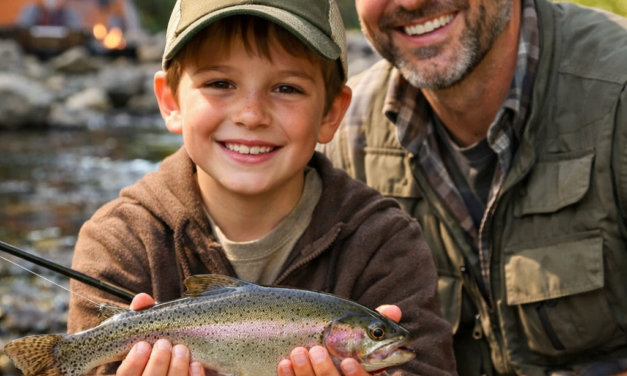
If you are new to the sport of fishing, and not sure if you will enjoy it, a great opportunity awaits you. CDFW offers two Free Fishing Days each year. On these days, you can fish without a sport fishing license. Free Fishing Days provide a great, low-cost way to give fishing a try. Some CDFW Regions offer a Fishing in the City program where you can go fishing in the middle of major metropolitan areas perhaps just a few blocks from your home. Fishing in the City and free fishing day clinics are designed to educate novice anglers about fishing ethics, fish habits, effective methods for catching fish, and fishing tackle. You can even learn how to clean and prepare your catch so you can enjoy it for dinner that night.
While all fishing regulations, such as bag and size limits, gear restrictions, report card requirements, fishing hours and stream closures remain in effect, there are two days each year when anyone can fish without purchasing a fishing license.
On Free Fishing Days, every angler must have the appropriate report card if they are fishing for (if applicable):
• abalone
• steelhead
• sturgeon
• spiny lobster
or salmon in the Smith and Klamath-Trinity River Systems.
Share Mountain Valley Living with your friends:
Fly Fishing Casting Basics
Courtesy of Takemefishing.org
In spin casting, the weight of the lure pulls the line off the reel. In fly casting, the weight of the line carries the fly to the fish. In fly casting, you must learn to use the fly rod to cast the weight of the fly line. You can do that quickly by following five basic principles of good fly casting:
• 1) The fly line (and fly) goes in the direction you point the fly rod tip during the cast.
• 2) Good fly casting is not strength-related; it is timing-related. You need to practice the timing of the cast to become a good caster. It takes 15 minutes a day for about a month to become a good fly caster.
• 3) Proper stroking and stopping of the fly rod are fundamental to good fly casting. The caster loads energy into the fly rod during the casting stroke. The fly rod releases the energy into the fly line in the cast. The fly caster loads a little energy (a short, low-energy stroke) into the top of the fly rod for short casts; he loads a lot of energy (a short, powerful stroke) into the middle and bottom of the fly rod for a long cast.
• 4) Casting arcs (the arc the rod makes in the air during the cast) in fly fishing are small for short casts and large for long casts.
• 5) Stopping the fly rod after the casting stroke is critical to forming the casting loop, and it allows the fly rod to unload, thereby casting the line.
Fly fishermen seldom need to cast more than 50 feet when fishing, but becoming proficient at long-distance fly casting can improve all your casting. You should learn to cast short (30 feet) first, and then practice at greater and greater distances.
You can’t learn fly casting from a book. You need to just do it. The more you practice, the better you’ll become. Practice on a lawn or pool. Casting while fly fishing is not practice. Practice allows you to focus on casting fundamentals without distractions.
Getting Started
The best way to learn fly casting is from an expert instructor. If one is not available, take your balanced fly rod, fly reel and fly line to your backyard. You’ll need at least 120 feet (60 feet in each direction) of lawn with no overhead obstructions.
Mark your fly line with an indelible marker at 30 feet. The marker will indicate how much line you have out when you cast. Also place hats or some other objects on the lawn 30 and 60 feet from where you will stand. The markers will help you develop the sense of distance that is critical in casting accurately to fly fish.
The Grip
Grasp the fly rod firmly with your casting hand and place your thumb on top of the rod grip. When you are learning to cast, keep the fly rod butt under and in line with your wrist and forearm. That way, the rod will remain in plane during your cast. If the fly rod comes out of plane during the cast, the tip wanders and the fly line follows the tip, wandering and spoiling the cast. Stand on the lawn with your feet slightly apart. Thread the line off the reel and up through the line guides and out the tip top of the fly rod. Tie a 9-foot leader to the end of the fly line using the tube knot and tie a small piece of yarn to the end of the fly tippet. Pull about 20 feet of line off the fly reel and lay it out on the lawn to the right of where you stand (to the left if you are left-handed). Make sure the fly line is drawn tight on the lawn and is not lying in S-curves or it will not cast well.
Using a horizontal side-arm cast, flick the fly rod tip forward from your right to your left (from your left to your right if you are left-handed), and watch the fly line form a loop and roll out to your left and then settle to the grass.
Using your arm and a flick of your wrist together (the way you’d throw a Frisbee backward and a baseball forward), cast the fly line repeatedly back and forth in backcasts and forward casts. Try to make the line form candy cane-shaped loops in both your backcasts and forward casts. Loop formation is the intent of your fly casting – the tighter the loops, the better the cast.
As you stroke the rod back and forth, keep a firm wrist and stop the fly rod abruptly after each stroke. Stopping the rod allows the fly line to form a loop off the rod tip. It also allows the fly rod’s tip to turn over to unload energy into the fly line efficiently. The energy in the fly rod casts the line. You must stop the rod when making both the forward cast and the backcast to become a good fly fishing caster.
After casting sidearm for 15 minutes, or until you feel comfortable with the feel of the fly line and fly rod, try casting the rod at a 45-degree angle and then vertically. You’ll use all these casting positions when you are fly fishing, so get used to them. You want to groove your casting stroke in the position that is most comfortable for you: sidearm, 45 degrees or vertical. The fly fishing casting principles remain the same for all casting positions. The sidearm cast allows you to watch the line and thus to teach yourself timing and loop formation.
Aiming the Cast
For short casts, you aim about 4 feet above the water (or lawn). As your casts get longer, aim higher to allow the line and fly more time to reach the target. Learning to aim accurately is a hallmark of expert fly casting. Practice makes perfect, so practice.
Share Mountain Valley Living with your friends:
In my opinion Lake Almanor offers some of the most pristine fishing in all of California. It supports healthy populations of quality trout and salmon. Because I enjoy the challenge of trolling for these elusive fish, it is where I concentrate my efforts.
When folks ask me what’s the best time of the year to catch fish the answer comes easily, the last two weeks of June and the first two weeks of July although you truly can catch quality fish all year round.
When they ask “Where and how we can catch some of these fish?” the answer becomes a bit more complicated. All fish species prefer a specific water temperature range. Salmon do best in water of about 54 degrees F. and trout like it about 59 degrees. So when the lake temperature is colder than that, fish in or near the shallower parts of the lake. In the summertime when the lake water surface temperature is in the mid to high 70’s, fish in or near where the water is deeper. The fish do move in and out of their “comfort zone” primarily for one reason-food.
Every time I think I have figured out what bait or lures are working best I get into a slump and then I hear some other fishermen sharing (bragging) of their success with some lure or bait and scent concoction that I have never heard of. Over the years, I have come to the conclusion that it is not so much what you fish with, but more importantly how and where you fish.
I almost always start out my day with at least one rod trolling blades with a half night crawler threaded onto a #4 bait holder hook. My second rod very often will have a small lure attached by a leader behind some blades. I troll the blades at 1.7 MPH, a little faster 2.0 MPH for lures only and slower at 1.0 MPH for threaded worms without blades. The most important thing about what tackle or technique to use is, if you are not getting any hits,-DO SOMETHING DIFFERENT! Change the boat speed, the fishing depth, location and/or the bait.
Where to fish? Never forget that all fish are “object freaks”. Use a good lake map to show you where the underwater points and drop offs are located. If you have a depth finder look for weed beds and rock piles that will attract and hold fish. I have figured out that I catch more fish where there is a sloping flat area near a drop off or deep channel. I think the bait fish are concentrated on the slopes and the game fish are below (looking up) for their next meal.
Having fished Lake Almanor for over 35 years there are many days that I have been very successful and like everybody else, other days that I don’t want to talk about. One thing for certain, I do enjoy hearing from folks to share info on what is working or not working. I look forward to hearing from you this summer.
Bob Kopernik
Lucky Grady Fishing Guide Service
408.515.1503 VHF Radio Channel 69
Share Mountain Valley Living with your friends:
By Melissa Wynn
Come wet a line with us and help support Eastern Plumas Rural Fire Protection District and Water Rescue Equipment at the annual Lake Davis Spring Fishing Derby. Prizes, including money and next years entry, will be awarded in categories for adults and juniors (under 16). Also, bring your favorite youngster to enter in the Dad & Me category. Even a prize for the smallest fish will be awarded, along with many more prizes in the raffle drawing.
Headquarters for this “fish on” favorite will be at J&J’s Grizzly Store and Camping Resort at 7552 Lake Davis Road at Lake Davis near Portola, Ca.
You can register for the derby at headquarters until 8:00 pm on June 14th. Registration is available until noon in Portola at K&S Market, Leonard’s Market, Firehouse Thrift and Valu-Wide Discount. Graegle residents and visitors can also sign up until noon at the Graegle Frosty. Derby entries on derby day will be taken at headquarters and at Honker Cove boat ramp.Entry forms are available online at www.graeagleplumas.com/springderby.html. Entry fees are $20 to pre-register and $25 on derby day. For more information contact Jeanne by phone at 530- 832-0270. Come on out and bait a hook!
Share Mountain Valley Living with your friends:
Bucks Lake
Family Playground/ Fisherman’s Paradise
Special to Mountain Valley Living Magazine
By Bryan Roccucci
photos by Bryan Roccucci
Located a short 17 mile drive from the town of Quincy, California is Bucks Lake. Bucks lies in a beautiful granite basin surrounded by tall evergreens at 5200 feet, and has often been referred to as the centerpiece of recreation in Central Plumas County. The dam was completed in 1928, transforming the lush Bucks Valley into the present day Bucks Lake and bringing it into what is now P.G.&E.’s California Hydro-electric Project. The lake itself has 14 miles of shoreline and roughly 1800 surface acres and is fed by five tributaries, which keep the average water temperatures cool and perfect for trout. Most of the lake’s northern shoreline is surrounded by wilderness and scenic views, while the southern side of the lake is dotted with cabins located on P.G.&E. and Forest Service leased land. This is also where you will find most of the services.
Bucks Lake has just the right amount of services available to travelers, families and fishermen alike. There are several lodges at the lake offering cabin rentals, motel rooms, restaurants and supplies. Two marinas offer docks, fuel, boat rentals, and other services to the boater and fisherman. There is also a quaint bed and breakfast/ store built on the site of a historic resort from Bucks Lake’s past. These businesses are all small family owned affairs and you can expect service that reflects that. If camping is more your style; there are a variety of campgrounds, both public and private, that are on or near the lake.
Bucks Lake offers year round recreation with cross country skiing, snow shoeing and snowmobiling being the most popular in winter. During the summer months, it is a popular spot for hiking, mountain biking, boating and of course fishing. Despite its popularity, it never really seems crowded. It is not uncommon at peak season to only see several other boats out in the early morning fishing. The peak season at the lake runs from Memorial Day weekend until Labor Day, but savvy fishermen know that some of the best action happens in spring and fall.
Fishing is probably the most common reason people venture to Bucks Lake. With five species of sport fish waiting to be caught; at Bucks something is always biting. Bucks Lake has always been known as a solid fishery for both Browns and Rainbows and many historical accounts often refer to both good quality and quantity. In the last 10 to 15 years Bucks has also been making a name for itself with the trophy Mackinaw that have been caught. Mackinaw or Lake Trout (actually, like Brook Trout, not even a trout but a member of the Char family) are probably most well know as the sport fish of Lake Tahoe. They also inhabit a number of Sierra lakes. Mackinaw can grow to very large size (as evidenced by the Bucks Lake record of 30 pounds) if the right conditions exist, and one of the biggest factors is food. These fish require large amounts of food to support their metabolism, which brings me to another of the five species found in the lake- Kokanee.
Kokanee, which are freshwater Sockeye Salmon, were originally planted into Bucks Lake in the 1950’s and found the lake’s conditions to their liking. The Kokanee population at Bucks exploded despite efforts to reduce their numbers and now can be seen each fall in large numbers spawning in Bucks Creek. In addition to providing the Mackinaw with a meal, they also have become a favorite target of many anglers, providing a great battle for their size as well as excellent table fare. Brook Trout, the last of the five species, provide great action all summer long. Most of the time these fish are found at or near the mouth of the lake’s tributaries taking advantage of the cool water entering the lake.
Shoreline access for anglers is abundant and literally surrounds the lake. Access can range from spots that can be driven to or are reached by short walks. The most common technique employed by shore based anglers at Bucks is bait fishing. Bait such as night crawlers, power bait, and salmon eggs are the most used. Casting lures from shore can also produce fish. Classic lures like Kastmasters, spinners and small Rapalas are some of the favorites. Most of the fish taken by “bankies” are Browns, Bows, or Brookies.
Boat fishing at Bucks is both popular and productive. Bait fishing often occurs in the same areas as the bank fishing but a boat offers the angler access to much more water. Most boats seen on the lake will be trolling. Trolling is one method that can consistently produce all five species of fish just by changing tackle, depth and location. Many types of tackle will produce trout from flasher/worm combos to hardware like spoons and spinners in a variety of colors. In order for me to diagram the tackle used to catch Kokanee I would need a lot more space than the editors are willing to grant me. Brightly colored lures, dodgers and spinners are at the foundation of any Kokanee box. To single out a few that seem to work best at Bucks; I would say color combinations of watermelon and pink are consistently good. (Always tipped with corn) Most of the Mackinaw caught each year at Bucks Lake fall to boat fishermen. Trolling large lures that resemble Kokanee or other fish is very productive. Vertical jigging is another method used to trigger stubborn Mackinaw to strike, and works well during the summer months when fish are hugging the bottom. While Bucks holds good numbers of trophy Mackinaw, they are not the easiest fish to catch and are very temperamental. Small fluctuations in water levels, temperatures and the weather can turn their bite on and off like the flipping of a switch. The prime time for the “Macs” is early season, just after ice out, through June.
Fly-fishing can also be very exciting at Bucks. Casting small wet flies during spring and summer near the mouths of the tributaries will usually produce fish. If you have a tube or small boat, even better; this will increase your opportunities. In Fall, float tubes are king. Every year during the late season fly anglers in tubes account for some of the nicest fish caught on the lake.
Note: There are two roads that lead to Bucks Lake from the Quincy side. Just after the town of Meadow Valley the road splits, to the right, Bucks Lake Road climbs quickly, wrapping you through a series of sharp narrow corners to the top at Bucks Summit and is not recommended for RV and larger boats and trailers. To the left, you will find Big Creek Road which is longer but a much more gentle grade and wider roadway. From the west, Bucks Lake can be accessed via the Quincy-Oro Highway, a two lane road leaving the town of Oroville. This road was once very steep and narrow, but in recent years much work has been done, and it is now a nice drive and easily accessible with RVs and trailers. One word of caution; because none of these roads are maintained during winter past certain points, it is wise to check with local authorities as to their status before heading up, especially early and late in the season. Usually the first springtime access to the lake will occur from the Quincy side, followed later by the Oroville side.
About the author:
Capt. Bryan Roccucci is a full time professional fishing guide and operator of Big Daddy’s Guide Service. Bryan specializes in year round trophy trout fishing while emphasizing light tackle fishing techniques on Lake Almanor (Jan.-May), Lake Davis (May), Bucks Lake (May – Sept.), Lake Tahoe (June – Sept.) and Eagle Lake (Sept. – Dec.) To book a trip on Bucks Lake or any of the other waters fished by Bryan or for more information please visit www.bigdaddyfishing.com or call (530) 283-4103.
Copyright © 2013 Bryan Roccucci All Rights Reserved
Share Mountain Valley Living with your friends:
Water Craft Maintenance Courtesy Of Paul’s Automotive
Warm weather is here! The lake is calling you to come out and play. The wind, the speed, the waves… but wait… did you forget to service your pleasure boat or personal water craft? They require regular oil changes. The frequency will vary by model, but a good rule of thumb is to change the oil every 100 hours of operation or at least once a year. Remember, your valued investment and summer toy has been sitting approximately a year and needs attention before hitting the water.
If you remembered to winterized your toy you need to re-install the fluids, drain plugs, replace the filter, make sure the battery is charged, and check the ignition system. If you forgot to winterize your toy, you may have other issues occurring that you do not want to find out about on the middle of a lake.
I always forget about my trailer. I admit I have been stuck on the side of the road just because I did not think about repacking those wheel bearings after dunking that trailer in and out of the lake the year before.
Trailer lights, do they still work? Are any of the wires hanging? What shape are the tires in? Is it time for trailer brakes? A curvy, steep road with no place to pull over is not the time to find these things out.
Ensure that your bilge (force) pump is functioning properly. Having your boat sink is a sure fire way to dampen your outing. The correct battery and condition of battery is essential to the length of time the pump will run and may be the difference between a new found lake reef or getting your boat back to dry land.
What about the vehicle you are using to tow your toy? Is it ready for summer fun? Pulling a loaded trailer is a lot of work for your vehicle. Your vehicle needs to be in the best operating condition possible. I offer a summer special that includes (for most vehicles): Oil Service, Brake Inspection, Starting / Charging System Testing, AC Service and Pressure Test of Cooling/ Heating systems. Bring your vehicle and summer toy in together to help limit the amount of time you spend in a shop instead of at the lake.
Remember to check your emergency kits too! Everyone should have an emergency kit in their vehicle. It is recommended to have flares, duct and electrical tape, drinking water, a first aid kit, blankets, clothing, a hand held radio, engine oil, washer fluid, coolant and a flashlight. Be sure to check or change your flashlight and radio batteries before every trip. The same kit should be in your boat with these additions: a water-resistant dry box to store your items in, a tarp, spark plugs, spare fuel hose / line, an incredibly loud air horn, aerial flares (flare gun), and a highly visible distress flag. Ask your Harbor Master if you should have other supplies based on the body of water you are enjoying that day.
Take care of your toys before your day of fun turns into a day that is done.
Share Mountain Valley Living with your friends:
By Melissa Wynn
Wouldn’t it be nice if every time you went to a new area for a grand adventure there was a local with the inside scoop to show you around? Allen and Susan Shephard, owners of Quail Lodge Lake Almanor, thought so too and would love to point out points of interest, rivers and streams and the many adventures at glistening Lake Almanor. Allen offers a guide service for fishing and hunting, and they work with other guides to ensure all their guests have the adventure they desire.
Tucked in the trees at 29615 Hwy 89 you will find the Shephards’ own little piece of heaven. With only five brand new and beautifully decorated rooms, Quail Lodge Lake Almanor is one place that never comes with worries of a crowd. Your vacation is all about you so Susan is always on hand offering old fashioned hospitality to ensure you have an amazing and memorable vacation.
Log beds draped in cozy quilts are the perfect place to snuggle in after a good visit in the gorgeous lodge complete with crackling fireplace and deep leather furniture. Fishing and hunting adventures are the specialty here and Allen is the man to guide you to where the trophy trout feed.
HUNT, FISH & STAY PACKAGES
Three night package deals are available and include expert guide service, plush lodging and delicious catered meals. Call for seasonal pricing for guided fishing and hunting packages. Just coming for the day but want a guide? No problem; give Allen a call to reserve your time slot. October 1st brings The Cast and Blast to Quail Lodge. Cast for big trout, bass, salmon and mackinaw and then blast for pheasants in this big adventure for lovers of the outdoors. Held in conjunction with “Hunting Buddies”, who host the pheasant hunt, this is sure to be a trip filled with trophies. Reservations are highly recommended, as space is limited. Applications are available by calling Quail Lodge at 530-284-0861.
This time of year also brings deer season. Why sleep in a tent and spend half the season scouting when you can call the Shephards? Allen will guide you to the big bucks and Susan will have dinner ready and your bed made when you get home. You can even catch the game on the big flat screen T.V. in the lodge or just hang around the fireplace telling stories of the one that got away. It is all the deer camp, with none of the chores.
If you don’t want to fish or hunt, simple lodging is always welcome. Come play at Quail Lodge Lake Almanor, and choose one of many area adventures. A two-room suite and an ADA compliant room are both in the works and will be available soon.
Quail Lodge
29615 Hwy 89 Canyon Dam, Ca
530-284-0861
www.quaillodgelakealmanor.com
Share Mountain Valley Living with your friends:
By Melissa Wynn
Local anglers agree that fall is the best time of year for German Browns in Lake Almanor. Come wet a line along the East Shore and bring your favorite flies and lures. Local guide Allen Shephard says fishing the top this time of year pays off in big Browns time and again. Make no mistake the Rainbows and famous local Eagle Lake trout will be biting too. Got bait? The Small Mouth Bass are ready for the “fish on” fight as well. Pack your tackle box and lucky hat, grab your favorite rod and reel and come fish fabulous Lake Almanor.
Fall fun in this neck of the woods always includes several hunting options. Archery and rifle hunts for mule and black tail deer are the name of the game for the big game fanatics in search of that towering rack and a tender venison steak. For those that prefer the challenges of bird hunting in the woods pheasants and mountain quail abound. Call out the big boys and drag out the big guns, its hunting season at Lake Almanor.
Source: Quail Lodge – Guide services for all hunts are available at Quail Lodge Lake Almanor also featured in this issue.
Share Mountain Valley Living with your friends:
By Melissa Wynn
June and July are the time of year that the Sierra offers its best to the serious fly fisherman. The weather is warm and the hex hatch is in full swing inspiring an annual trout feeding frenzy. Sportsman and naturalists from all over the world come to our neck of the woods to share in this marvel of nature. Its an amazing sight to see. Thousands of duns float to the waters surface and hatch en mass, flying away as a single massive cloud. As the hatch begins the trout shift into feeding over drive, trying to catch as many from the fly buffet as they can eat. Come on up with your pole and add your favorite fly to the hatch. You are sure to catch your limit in no time, fish on!
Several lakes and waterways in our area offer a wide variety of places to go for the hatch. Those that prefer lake fishing can catch their fill from Lake Almanor, Butt Lake, Eagle Lake,Frenchman Lake or Lake Davis just to name a few. River anglers are chomping at the bit to fish the world famous hatch along the Feather and Pit Rivers. Hat Creek and Burney Creek are just two of the countless creeks and streams in Mountain Valley Living country that also host the hatch. For a bit of sight seeing and wandering you could fish several of these locations in a single weekend.
Although these areas offer world class trout fishing year round, nothing comes close to the adrenaline pumping rush you get speed fishing the frenzy of the hex hatch.
Share Mountain Valley Living with your friends:
- Hunting Buddies Hunting Company – Hunt Pheasants, Hunt Chukar, Northeastern CA, Northern California
High Desert Hunting Club Welcomes Just One Group at a Time
Litchfield, CA – By Eileen Majors
When two buddies routinely get together and go hunting long enough, big things can happen and and that is just what happened with Jim Brown and Howard Hanlon of Lassen County. I met up with these two who started their own 191-acre pheasant and chuker hunting club. Amid listening to a few humorous ‘jab’s at each other and many a “Yes Ma’am” for me, these young spirited, yet old fashioned gentlemen shared how they got started. They have been hunting together for 20 years and are dedicated members of Pheasants Forever, a non-profit group dedicated to the sport.
The club they have opened, Hunting Buddies Hunting Company is located in Litchfield, California and they are pleased to offer access to all levels of hunters’ physical abilities and hunting expertise. The property spans 191 acres of grass and mixed brush cover and is located at the confluence of the Susan River and Willow Creek, approximately three miles west of Litchfield, CA. The town of Susanville, nearby, provides restaurants, services and lodging. Reno is a little over an hour’s drive from the club.
The cost to hunt is $20 per pheasant or 20 for $360, making it $18 per bird. Chukars are $15 each or $13 when you purchase 20. Hunting dogs and handlers are available to hunters, as well as trap shooting.
Training hunting dogs is another popular use of Hunting Buddies Hunting Club which also hosts special training events and dog trials from time to time. They are proud of their efforts to eradicate White top, a noxious weed and general nuisance to hunters and dogs. The club has a barbecue available, horseshoes, and a fire pit.
They’re open from the 1st of October to the end of March. The club only hunts one group at a time so calling ahead at least a few days is necessary to set up a hunt. Large and corporate groups are welcome too and no group is too large according to these two hunting buddies. The club is licensed with the Department of Fish & Game and insured through NRA. You can reach Jim or Howard at 530-257-6464 or 530-251-7317.
Share Mountain Valley Living with your friends:
Fishing is one of America’s favorite outdoor recreational pastimes.
The California Fishing Passport Program is grounded in the belief that fishing offers an excellent opportunity to spend quality time with family and create lifelong memories.
Getting out on the water helps reduce stress and makes people feel good.
Fishing enhances appreciation for the natural world.
Studies show that nine in 10 Americans believe outdoor recreation benefits the environment because it gives people a reason to care about the resources upon which their activities depend.
By participating, anglers provide vital funding.
Fewer than 10 percent of recreational anglers are aware that their participation plays a vital role in sustaining resources and promoting safe and responsible use of our nation’s waters (Recreational Boating and Fishing Foundation). DFG’s freshwater and aquatic resource management budget is largely supported by fishing license sales and Sport Fish Restoration funds. These funds are derived from motorboat fuel taxes and a special excise tax on fishing tackle and equipment.
GETTING KIDS INVOLVED
Children need to get off the couch and re-ignite their innate sense of curiosity and awe in nature.
Being out on the water fishing provides an excellent opportunity to teach kids new things about the environment and fishing along with boating and water safety skills.
Kids enjoy feeling included and it is a great way to instill responsibility in children, by teaching them how to fish. Time spent fishing connects family and friends. Fishing is something everyone can do and learning to fish is half the fun.
Source: California Department of Fish & Game dfg.gov
Share Mountain Valley Living with your friends:
My name is Bob Hertzig and I was born and raised in the town of Westwood, CA. Westwood was a company owned lumber town and I spent my childhood there between 1942 and 1960. Times were good, lumber was in high demand, the schools were full of kids, the houses in town were full of people and everyone seemed to have a job in the mill. My Dad was the Fire Chief for Westwood, which meant that I got to play in the Fire Hall and associated with a lot of older men. I used to like to listen to all their stories. It seemed that one of the great pastimes was to go fishing and then to tell the biggest story of how many and how big of fish that they caught.
When I was growing up in high school, I was fortunate to have a steady job at George Young’s Market in Westwood. This kept me very busy with school, sports and working, so I did not have time to go fishing. I always thought that it would be nice to catch a large string of fish or to land a really big one that I could brag about. After High School I went to College at Chico State and got my Bachelors Degree in Accounting. After college, I went to work for the Federal Government, auditing Defense Contractors. During that time, I lived at many different locations and have been in most of the Defense Contractor’s plants in the country. After about fifty years of working, I have retired and spent half of my time in northern California in the summers and the winters in southern California.
At the beginning of the summer in 2009, I really wanted to go fishing to complete my dream of catching my biggest fish. Without any fishing experience at all, I knew that I really needed some help. I had heard that one of my old High School buddies, Dick Mason, had a Guide Service and that he consistently caught big fish. I called Dick and told him what I had in mind and he said that he liked to fish Eagle Lake in the Spring, Lake Almanor in the Fall, and Lake Shasta in the Winter. I said sign me up!
My first trip was to Eagle Lake and there were three of us. We left early in the morning and launched the boat and started fishing about dawn. Dick showed me what pole to use, what bait was hot, how much line to let out, and how to “play the fish” and net them once they got to the boat. We caught our limit and we headed home about noon. We went to Dick’s house and cleaned the fish and relived our victorious day.

My second trip, Dick called and said that the Bass were biting in Lake Almanor and I said “let’s go.” Again Dick provided everything, the boat, the equipment, the bait, and the stories. We started fishing along the bank just after the sun came up and by noon the three of us had caught our limit of Bass and we started back to the boat ramp. On the way back, Dick hooked us up to troll for some trout. It wasn’t long and my pole took a dive and I had a really good fish on the line. I could see that it was a nice fish when it would jump out of the water and its beautiful rainbow would sparkle in the sun. It seemed to fight forever and after some time we landed the fish in the net. This was the biggest fish that I had ever caught. It was 22 inches lone and weighed just under 5 lbs. It was a beauty. Dick took my picture of my prize. What a great Day!
 Bob's Biggest Fish Ever!!!
I could not contain myself. I was bragging to everyone. I even sent pictures to my kids. My son Jeff in southern California said that he would like to go on a fishing trip. I called Dick and set a date. Jeff flew into Reno and we met him there in the morning and drove through Lassen Park that afternoon. The next day we were on Lake Almanor bright and early, trolling for trout. It was a good day. The sun was shining, the fish were biting, and the air was clean and fresh. Again Dick provided us with a complete fishing experience. Showed us how to fish, where to fish, and even helped us clean the fish for the best fish dinner ever. Dick even provided the photos so I can brag about this forever. Like I said earlier, this was the best summer yet!

Share Mountain Valley Living with your friends:
By Melissa Wynn
1) Choosing Your Fire Site
- DO NOT build a fire at a site in dry, dangerous conditions. DO NOT build a fire if the campground or area does not allow campfires.
- Check to be sure than burning is allowed on the days of your trip. Campfires are often prohibited on high risk days.
- Choose a site that is at least fifteen feet away from your tent or camper, shrubs, grass or trees. Also beware of low-hanging branches overhead.
2) Making Your Fire Pit
- Clear your pit area down to the dirt, leaving a ten foot circle of bare ground surrounding your fire.
- Dig your pit about one foot deep, but not too big. Huge campfires can easily get out of control.
- Surround your pit with rocks to create a barrier.
- Store your firewood downwind from your fire pit.
- Keep a shovel and bucket of water nearby.
3) Building Your Campfire
- Gather three types of wood
Tinder (small twigs, pine cones, pine needles, dry grass)
Kindling (bigger twigs, small chunks of deadwood)
Fuel (larger pieces of dry wood)
- Loosely pile tinder in the center of the fire pit.
- Add a few pieces of kindling .
- Light the tinder with a match or lighter. Dispose of matches IN the fire pit. Add more tinder as your fire takes off.
- Next, add kindling and firewood to keep the fire going.
4) Putting Out Your Campfire
- Allow the fire to burn out completely.
- Pour lots of water on the fire. Soak ALL the embers, red and black coals.
- Keep soaking the pit until all hissing sounds stop.
- Stir the wet campfire pit with a shovel or big stick.
- Stir and make sure everything is wet and all embers are cold to the touch.
- DO NOT bury the fire as it can continue to smolder and could catch roots on fire that will eventually get to the surface and start a wildfire.
- Make sure you pit has quit smoking.
REMEMBER: NEVER LEAVE YOUR CAMP SITE UNTIL YOUR FIRE IS FULLY EXTINGUISHED!!!
Share Mountain Valley Living with your friends:
By Melissa Wynn
Lake Davis Fishing Derby
The Portola Rotary Club will be sponsoring its 13th Annual Fishing Derby at Lake Davis on June 18, 2011. Official registrations may be purchased at : Dollard’s Sierra Market until 8pm on Friday before the derby ~ J & J Grizzly Store and Camping Resort until closing on Friday night only until 8pm. ~ Fish derby headquarters (next to J & J Grizzly Store and Camping Resort) until 8pm Friday night and from 5am the day of derby.
$25 Pre-registrations $30 Derby Day registrations $50 Family (2 adults & up to 3 kids under 16)
The Portola Rotary Club has worked tirelessly to bring anglers of all ages to seek the thrill of “Fish On” at Lake Davis in the majestic California wilderness. These great outdoors offer tons of activities for every member of the family. Fliers are available at the registration desk to help those not fishing choose activities from hiking nature trails to shopping and dining that can’t be beaten.
Several locals that fish Lake Davis regularly will be on hand with tips on everything from choosing the sweet fishing spot to what the coveted catch has been liking for bait lately. Campsites are available. Bring the family and help the children learn to fish. Great prizes!!!
For Fishing Derby rules and to print a registration form in advance, visit www.rotaryclubofportola.com or call Benji at 530-832-1852.
Information sources: Eastern Plumas Chamber of Commerce ~ myoutdoorbuddy.com ~ graeagleplumas.com
Share Mountain Valley Living with your friends:
INFO FOR BOB FOR THIS COLUMN:
Frenchman Lake Fishing Information: Courtesy of Wiggin’s Trading Post (530) 993-4683
Winter Fishing with Dick Mason westwood – phone book
Eagle Lake Heats UP!! Information from _Dave_ Hutala of the Elegant Iris and The Men Den in Susanville.
Bucks Lake Fishing – Winter? bucks lake lodge contact…
Big Daddy’s Guide Service – follow up with Bryan, emailed him…
whenever…. use as source and Recommend The Almanor Fisherman – magazine
Refer: Lake Davis Fishing reports: Courtesy of Dollard’s Sierra Market… check for contact
Refer: Feather River and Lakes Basin Fishing Report from Ace Mountain Hardware & Sports (530) 836-2589
The Almanor Fisherman - an annual magazine
Lake Davis is ‘Hot’ for fall fishing, according to Jeanne of J&J’s Grizzly store at Lake Davis,unless they have a big freeze! (I have enclosed some pictures for you to use of Lake Davis in the fall and other areas in Eastern Plumas.NEED PHOTO CREDIT.. submitted Eastern Plumas Chamber of Commerce, by Plumas County Visitors Bureau, also emailed to bob)
Share Mountain Valley Living with your friends:
By Eileen Majors
I love it when people from the city come to visit our mountain valley area. An air of relaxation seems to overcome them. It is obvious they have chosen this time to escape from their busy lives and relax to a simpler tune, for a time anyhow. I can remember making the trek up the mountain with our old truck (to the sheer delight or our five year old son), every weekend for several months before taking the big leap and moving here. It was pretty cool summer and winter to stay with Uncle Chuck.. We romped in the woods. We swam. We got firewood. We shoveled snow and we always ate well. Potlucks and friendly neighbors were plentiful. I really did like this laid back lifestyle.
I literally cried my way up the hill though, on that day I left my ‘citified’ life in Concord, CA. I had traded it all for a rugged ride into a quiet mountain life. I was immediately anxious though: what was next as I left the hustle and bustle of my busy life which included a 40 hour week and a commute to boot? Time had been clicking by mighty fast with never enough to go around. Was that so bad?
Then suddenly I had arrived in this tiny little town, without even one stoplight where, it seemed to me, time had stopped. Talk about relaxing to a simpler tune, I went from my extremely busy, multi-tasking lifestyle to walking to the post office every day in hopes of mail from ‘home.’ I didn’t get much although I do recall having so much time that I baked cookies and mailed them to my friends in oatmeal boxes. I indulged in bike rides and taking walks and even learned how to play tennis and can fruits and vegetables thanks to my friend Shirley Foltz (now of Susanville) who had also traded in her busy Concord life.
It was not long until several more of our Concord friends (including my sister with her family, and my parents) were also drawn to life here in the mountains. I have always likened it to high school, where everybody knows each other. There is nothing like the way people accept each other as they all live together in communities not necessarily separated by income levels or other status. It would be hard not to also mention the beautiful lakes, streams and adventures we found to experience through this mountain life, indoors and out! All four seasons are welcomed and experienced to the fullest, it seems to me, probably because there is just a little more time here. Without a doubt, this is ‘home’ now. I have noticed over the years that while some people come and go, they usually still consider this ‘home.’ It is easy to do. It’s easy to fit in. It’s hard to keep secrets but there is nothing like a small town that acts like family.
I will never regret my decision to give up the city life, even though it meant giving up some security at the time. Raising kids mountain style is an experience I am thrilled and proud to have had a part in, and grandkids, all the better. Come for a weekend or come for a lifetime but take a little time when you can, to relax to a simpler tune.
Share Mountain Valley Living with your friends:
Eileen | Mountain Valley Living Magazine
Chuck and Ray Weeks of Oroville, Ca. showing their catch in the fall at Lake Almanor. This is the kind of fishing people can expect in the spring and fall.
Dick Mason runs a fishing guide service by boat on local lakes. During the off season at Almanor, Eagle and Butt lakes, he spends time at Lake Shasta.
I had a tough time finding good old Dick Mason to get any fishing information this month because he’d been out fishing Eagle Lake every day. When we finally caught up with him, we found out he was about ready to change directions for September.
His favorite lakes to fish in the fall are Almanor and Butt, though you will still find him up at Eagle Lake now and then. Dick cautions that this year Eagle Lake is low and boat access in the fall is best on the north shore.
Fishing in Almanor really starts heating up in September according to Mason, when he first heads out to the east shore. During the first phase of fall, Mason usually ends up between the Benton House and the Dorado Inn which are both located on Eastshore’s Highway 147. Boat access is free at two public ramps on the west shore. The first is located on Highway 89 at Canyon Dam. The second can be accessed through the Forest Service campground near Prattville by taking the Almanor Drive West turnoff from Highway 89. Canyon Dam is the closest to the Dorado and Benton House. Dick said that around Labor Day is usually when he heads that direction to take his fishing clients. He says to fish 35 to 40 feet deep and recommends using lures such as Needle Fish, Speedy Shiners and Ex-Cel. Also effective is using a threaded night crawler. Another option is to use a piece of a threaded night crawler behind a Seps Sidekick. This time of year your efforts should produce plenty of big fish.
“When we get some good hard frost, usually by late September or early October, I move up to the north end of the lake to fish in shallower water (20′ to 12′deep),” said Mason. Late September and October are Dick’s favorite months, by far, for local fishing. “While Almanor generally produces more rainbow trout, at Butt you will see more German Browns in the mix,” he told us. At Butt Lake, launching is also free at the Ray Adams Memorial Boat Ramp. “There are a few more snags,” he cautioned, “so you may lose some gear.”
With lures, you should be at a fast troll (approximately 2.7 miles per hour). With night crawlers, a slow troll (about 1 mile per hour) is best.
Good Luck! If you are a stream fisher or fish other lakes in the region and have knowledge to share with our readers, email editor@mountainvalleyliving.com.
.
Share Mountain Valley Living with your friends:
In this group there are 3 super bowl rings, 1 rushing touch down record for the season and 1-most receptions for the season. In the picture they are; fishing guide Mark Jimenez, sports agent Joe Martin, MacArthur Laine, Jeff Stover, Jack Tatum, George ???, and Dick. Jeff Stover has 2 super bowl rings with the 49ers, Jack Tatum has 1 super bowl ring with the Raiders and he played in 3 pro bowls. MacArthur Laine led the league in rushing touch downs in one season. He also lead the league in pass receptions out of the back field in one season and had 1 pro bowl appearance. These guys are the real deal and were a real pleasure to have in the boat.
Share Mountain Valley Living with your friends:
LAKE ALMANOR, CA
It was a usual warm summer day with a lake full of swimmers, boaters and skiers. Typically the third week of June transforms the Almanor basin into a vacation wonderland, welcoming visitors from throughout the state and beyond. This day met all of those qualifications and resulted in outdoor chefs lighting grills all across the the lake. Scents of burgers, ribs and stout steaks took over our RV park as visitors mingled in their friendly fashion. When summer sunshine began to fade on the west shore skyline, fishermen from all over the park ventured out to their boats. One patio boat carried several men including a last minute boarder, barely making the boat after work in Westwood. Another rushed in from Susanville in the nick of time. This evening they did not have to venture far; several hot spots were expected on the lake this evening and for several more evenings to follow.
It’s the annual hex hatch at Lake Almanor and even if you are not a fisher, it is something to see. As the sky turns to dusk, as if out of nowhere, duns float up to the water’s surface, hatch and fly away. It is a phenomenon to witness and one I will not soon forget. For the fishermen too, it is unforgettable as it seems to make the the fish go crazy, jumping and biting like mad. Most of the guys I spoke with return every year, for as many evenings as they can, for this fish feeding frenzy. It doesn’t last long. Strings of fishing boats leave the marina just as the sun fades, get positioned for dusk, fish like crazy, then return about an hour later.
HEX HATCH FISHING FACTS
• Each year as the Hexigenia hatch and fly off the surface of Lake Almanor, fish go into a feeding frenzy. If you can manage to place your fly in just one of the many feeding lanes, you should be in for a great fight.
• Each year the hatch usually occurs between the end of June and the first part of July, although no one I spoke with wanted to predict it. Ask around or check in at The Sports Nut. This shop also publishes a regular fishing report for anglers visiting the Chester area. Word spreads quickly when the hatch is on.
• There is no need to get up early for this event since the flies do not hatch until dusk.
• The nicer the day, the better the hatch will usually be. If it is a cold and rainy day, the chance of seeing a big hatch of bugs is minimized.
• Under good conditions, duns may be seen rising off the water around 7:00 pm but this is just the false hatch. The real hatch will not start until the sun starts to go down.
GEAR:
A standard 5 or 6 weight fly rod will suffice along with a floating forward taper. One good thing about fishing the hatch is that you won’t need an extremely long leader section. Since you are fishing after dark and because of the mass of activity on the water, fish will not be as wary of your fly line. A 7 1/2 foot leader should do just fine and a short stout tippet section is recommended when you are trying to catch big brown trout with good size teeth.
Share Mountain Valley Living with your friends:
Q: What will I learn in the Hunter Education Course and how long will it take?
A: The Hunter Education Course consists of a minimum of 10 hours of classroom, homework, and field instruction in the following areas: firearms safety and handling, sportsmanship and ethics, wildlife management and conservation, archery, black powder, wildlife identification, game care, first aid, and survival. After a student has successfully completed the course of instruction and passed the final examination, they are awarded a Certificate of Completion. Parents are encouraged to participate with their children in the course and its related activities. There is not a minimum age requirement to take the course, but young children may find the course demanding.
A fee may not be charged for an instructor’s service; however, fees may be used to cover the purchase of training aids such as slides, flip charts, targets, and other training aids. The Hunter Education Instructor makes the final decision in determining whether a student is qualified to receive a Certificate of Completion. A student who is unsafe, or fails to demonstrate good sportsmanship will not be issued a Certificate of Completion.
Q: Are senior citizens exempt from having to take a hunter education course?
A: No.
Q: Is a law enforcement officer (active duty, reserve or retired military) required to take a hunter education course even if they have had firearms training?
A: Yes. All first time California hunters must successfully complete a hunter education training course or pass an equivalency exam. Visit our web site at www.dfg.ca.gov/huntered/index.html for more information.
Share Mountain Valley Living with your friends:
TAKE THE CHALLENGE! CA Dept. of Fish & Game invites you to take the challenge. Catch six different forms of California native trout from their historic drainages and photograph the fish. If you do, you will receive a colorful, personalized certificate featuring the art of renowned fish illustrator Joseph Tomelleri. Your certificate will show six full-color images representing the trout you caught, along with their dates and locations. It is sized to fit in a standard 16 x 20 inch matted frame.
- There are no time restrictions to complete the Challenge. Native trout caught from appropriate waters and verified with a photo can qualify, even if caught years ago.
- Only one certificate per calendar year may be earned. Anglers may apply in subsequent years with different combinations of native trout.
- All photos and applications become property of DFG and cannot be returned.
- After applications are reviewed by DFG, anglers will be notified by mail. All decisions are final.
The application can be downloaded and more information can be found at www.dfg.ca.gov/fish/fishing/Recognition/HTC/HTC_Policy.asp. CDFG, or request information by mail to DFG Fisheries Branch, 1416 Ninth Street, Sacramento, CA 95814.
NATIVE OR WILD TROUT…IS THERE A DIFFERENCE? A wild trout is a trout that was born in the wild and spends its life cycle in the wild, regardless of the origin of its parents or ancestors. A native trout is a trout that was found here originally, prior to human influences. A wild brown trout is not native to California. A coastal rainbow trout is a native California trout (even if it came from a hatchery). A golden trout born in the Little Kern River is a wild, native trout.
Share Mountain Valley Living with your friends:
Use the full photo of John Cox shooting – photo by Jan Cox from last may gun club article online
LOCAL GUN CLUBS
By Jan Cox
The spring time signals time for the area’s local gun clubs to begin meeting again. Local clubs serve different types of shooting which can include trap, rifle, pistol, skeet, or sporting clays, depending on the specific club. We found these clubs to tell you about:
The Al Hoop Range is the home of the Westwood Rifle and Pistol Club and is located ½ mile west of the junction of Highways 147 and 36 down a dirt road about a mile. Each year they begin in late May and end in October. Here, trap, rifle, or sporting clay meets are held on either Wednesday evenings, Saturdays or Sundays. The Al Hoop Range is open to anyone who wants to shoot. The public can shoot rifle or pistols at targets anytime but must bring their own targets and remove them when done. The range is also used for pistol practice by law enforcement, hunter education courses, concealed carry permit classes, youth shoots, Boy Scout and church group shoots. For information, contact John Cox at 530-256-2119 or George Orloff at 530-596-4116.
The Sierra Valley Sportsmen Club, located two miles south of Sierraville is on highway 89 on Forest Service land. This club has a trap range, a pistol range and a 500 yard rifle range. It is usually open on Sundays from ten o’clock on. If the gate is locked at other times, shooters can sign out a key at either the gas station or Forest Service office. Pistol and rifle shooters bring their own targets: there is no charge to shoot. This range is open from May 15 through November 15. For further information, contact Bill Fowler at (775)971-9845.
Quincy Sport Shooting Association is also found on Forest Service land. They run regular series for trap and pistol and also have a 100 yard rifle range. Because they are lower in elevation, they run year around for trap and during daylight savings time for pistols. There are shoots every other Sunday beginning at 10 AM and on the opposite Friday nights beginning at 1 PM. They can be contacted at P.O. Box 3391, Quincy or by calling Larry Lawson at 530-283-1772.
Sierra Sportsmen Club in Susanville has a skeet range available plus several trap stations, a pistol range, rifle range, and also offer Black Powder Cowboy Action. ECD Classes are offered at the local gun store in town. When you become a member, you are given the combination to the range gate found on BLM land in Rice Canyon, near the prison. Weather permitting, shoots are held from March 1st to November 1st. For more information call Lowell Harwood at 257-3764,
The Sierra Valley Gun Club of Portola is located 3.2 miles south of highway 70 off A23. Their SCTP or Scholastic Trap Program is for youth and begins in the spring and culminates with youth, fifth grade through high school, shooting at a state or national event. Small bore and varmint silhouette rifle shoots take place on Saturdays, while those interested in trap meet on Tuesday evening’s beginning at 4 PM. This year the club will have three trap shoots for those registered with the Pacific International Trap Shooting Association. The first of these will be on April 17. For more information contact Ron McGarr at 832-5959.
Share Mountain Valley Living with your friends:
Q: Is there a reduced-fee hunting license?
A: Yes. If you are a disabled veteran, you may be eligible for a reduced-fee hunting license, available only at DFG license sales offices, or by mail using their hunting license mail order form. To qualify for this license, you must submit BOTH of the following:
- A letter from the Veterans Administration verifying that you have a 50 percent or greater service connected disability and were honorably discharged from the United States armed forces; and
- Evidence of meeting California hunter education requirements as required in Fish and Game Code, Section 3033.
For information on free and reduced fee fishing licenses, see page 8, in ‘RV Travel’. To obtain the hunting license mail order form, download it from the Department of Fish and Game at http://www.dfg.ca.gov/licensing/forms/forms.html.
Share Mountain Valley Living with your friends:
FREE AND REDUCED FEE FISHING LICENSES
If you aren’t sure if you can afford that fishing license this year, there may be some help out there for California residents. The Department of Fish and Game offers free or reduced price fishing licenses in the following circumstances:
2010 REDUCED-FEE FISHING LICENSES – FEE $6.25
Fish and Game Code, Section 7150, authorizes the Department of Fish and Game to issue Reduced-Fee Fishing Licenses to the following anglers:
A) Any person 65 years of age or older who is a resident of California and whose total monthly income from all sources does not exceed the income levels below. Income Verification from your Social Security office is required annually.
1) $850 for single persons, or
2) $1,489 for married persons (combined income).
B) Any honorably-discharged veteran of the U.S. Armed Forces with a service-connected disability rating of 50% or more. Proof of eligibility from the United States Veterans Administration or a copy of last years license is required.
2010 FREE FISHING LICENSES
Fish and Game Code, Section 7151, authorizes the Department of Fish and Game to issue Free Sport Fishing Licenses to anglers who meet specific criteria. Additional stamps or cards are required for certain species and areas and must be purchased at the regular fee.
Five-Year Free Sport Fishing Licenses are available for anglers who meet the criteria below:
A) Any person, with central vision acuity of 20/200 or less in the better eye with the aid of the best possible correcting glasses, or central vision acuity better than 20/200 if the widest diameter of the remaining visual field is no greater than 20 degrees. Certification of blindness by an optometrist or an ophthalmologist is required.
B) Any person who is a resident of the State and who is so severely physically disabled as to be permanently unable to move from place to place without the aid of a wheelchair, walker, forearm crutches or a comparable mobility-related device. Verification by a licensed physician or a copy of the previous year’s free fishing license is required.
C) Any developmentally disabled person. Certification by a licensed physician or the director of a State regional center is required.
One-Year Free Sport Fishing Licenses are available for anglers who meet the criteria below:
A) Any American Indian or lineal descendant who is a resident of the State and whose total annual income does not exceed $10,830 for the head of the household, plus $3,740 for each additional family member living with them. Certification by the Bureau of Indian Affairs (B.I.A.) or proof of being on a tribal registry is required. Verification of income on Form FG371 is required annually.
HOW TO APPLY
Applications and licenses are available only at DFG License Sales Offices or through the mail. If you meet the criteria described above for a license and want to apply by mail, email LRB@dfg.ca.gov and include your name, mailing address and the type of application (reduced-fee, free one-year or free five-year) needed.
Source: CA Dept. of Fish & Game. For more information, please visit http://www.dfg.ca.gov/licensing/fishing/sportfishingfreereduced.htmlFREE AND REDUCED PRICED FISHING LICENSES
Share Mountain Valley Living with your friends:


Well, we are having a good winter. Let’s hope the snowfall is enough to fill the lake. It has a long way to go. Last year was a good fishing year. An early run on salmon started the season followed by rainbows and browns all the way up until the end of my guide season – the last of November.
Now what do I do in December, January and February? In December I hunt turkey, ducks and geese. But January and February, with conditions just right and a lot of cold weather, the lake freezes in some areas and then I can ice fish.
Try ice fishing for something different. Talk about fun and different, this is it!! There are a few things you need to know however. If you are fainthearted at all —- don’t read this. You have to really like fishing and be a little bit nuts— I guess that covers me. But, I’m careful, really careful, knowing the ice is crucial. I prefer 3″ or more rock hard slick ice. The thing to watch for is pressure cracks. You can hear the ice move and crack all the way across the lake. That usually indicates good ice.
As long as the weather stays cold, the ice will keep freezing. Always take a long rope with you and tie off to the log boom or dock or anything else that is solid. This is your lifeline in case of an ice failure. Use an ice auger to cut a hole no bigger than 8″. Keep your rope next to you or tied to you for safety. You don’t need to go out very far, only about as far as you can cast or just a bit further.
Use a short 4 ft. rod with six# line and a spinning reel. A variety of bait worms, mealworms, red & white eggs, roe and yellow and white small 1/16 oz jigs. Fish about 2-3 ft. off the bottom. Note: Fish bite short in the cold water, so the best thing to do is let them have the bait well before you set the hook. Fish bite all day long as schools pass by.
Along the East Shore the wind blows and doesn’t let the ice freeze solidly. Be careful of snow on the ice, for this covers up the thin ice. The best thing to do is use you head. I’ve been fishing the ice for more than 40 years and as much as I know, I just fish offshore sometimes and don’t venture out on the ice at all. You know you just get that feeling: it’s called “good common sense.”
Never attempt to walk clear across the lake anytime. And when ice shifts and goes up on top of another layer it can be very dangerous. Just the other day, the ice shifted and took down a buoy — that is a sign of becoming bad ice.
Places to ice fish are along the west shore and down by the dam. For the rest of the years’ fishing, I would say it’s going to be good. More fresh water and a good population of bait fish (smelt) are in the lake. Good fish plants were made in 2007.
For more guiding information, give me a call at (530) 259-2051. This is my 45th year of guiding on Lake Almanor. Hope to see you soon.
Good Fishing.
Doug D’Angelo
Share Mountain Valley Living with your friends:

In 1980 a group of concerned fishermen, business people and the Chester/Lake Almanor Chamber of Commerce formed the Almanor Fishing Association. This organization is “dedicated to the enhancement and preservation of a high quality fishing resource in Lake Almanor and assuring its continual availability to everyone wishing to enjoy the sport of fishing.” It is now more than 300 members strong and what a dedicated bunch. For over 14 years, volunteers of the Almanor Fishing Association have raised 50,000 Eagle Lake Trout to supplement the Department of Fish & Game plants.
In early November, DFG delivers the 50,000 trout to Hamilton Branch where volunteers separate them into 10 submerged cages near the PG&E powerhouse. Through snow and ice, 28 Almanor Fishing Association volunteers feed the Eagle Lake Trout every day, using 15,000 pounds of food donated annually by Kokanee Power . Heavy Sierra snow days require the cages be shoveled off so they won’t sink from the weight, thus allowing the small fish to swim away. In May the cage gates are opened and the fat, healthy, hand fed Eagle Lake Trout, now 10 to 12 inches in length, swim off into Lake Almanor in search of this years favorite bait, maybe at the end of your line. Those that escape participation in the human thrill of “Fish On” will continue to breed on their own and
grow into the catches that bragging rights are made of. Almanor Fishing Association Treasurer, Paul Garrido, was kind enough to take MVL on a peaceful boat ride to tour the cages at Hamilton Branch. I was very impressed by the true enjoyment Mr. Garrido experiences being a part of this community active organization. He is genuinely proud of the public fishing and picnic area, also at Hamilton Branch, that was created for our enjoyment thanks to the dedication and hard work of the members of the Almanor Fishing Association. This is a favorite picnic spot for our family since it is one of the few spots with a wheelchair accessible ADA approved restroom. The association’s pride shines through in the care given to this shady, forest recreation area. To learn more about this association, the wonderful contributions they make to local communities, surf the proud catch pics or just learn more about fishing Almanor, please visit their website at www.almanorfishingassociation.com. My thanks to Paul Ga
rrido for the great afternoon and hats off to the volunteers for giving us 50,000 good reasons to fish Lake Almanor.
- Almano r Fishing Association Treasurer Paul Garrido
Share Mountain Valley Living with your friends:

Approved 2009 Deer Seasons – Additional Hunts
Hunt Number- Hunt Title- Tag Quota
G-1 Late Season Buck Hunt for Zone C-4 24-Oct-09 – 01-Nov-09 2,710
G-3 Goodale Buck Hunt 05-Dec-09 – 20-Dec-09 35
G-6 Kern River Deer Herd Buck Hunt 05-Dec-09 – 13-Dec-09 50
G-7 Beale Either-Sex Deer Hunt (Military Only) 15-Aug-09 – 01-Nov-09 20 Military
G-8 Fort Hunter Liggett Antlerless Deer Hunt 10 Military and 10 Public
G-9 Camp Roberts Antlerless Deer Hunt 31-Aug-09 – 07-Sept-09 15 Military and 15 Public
G-10 Camp Pendleton Either-Sex Deer Hunt (Military Only; Hunt Day Restrictions) 05-Sept-09 – 06-Dec-09 400 Military
G-11 Vandenberg Either-Sex Deer Hunt (Military and DOD* Only) 31-Aug-09 – 31-Dec-09 500 Military and DOD*
G-12 Gray Lodge Shotgun Either-Sex Deer Hunt 19-Sep-09 – 27- Sept-09 30
G-13 San Diego Antlerless Deer Hunt 24-Oct-09 – 15-Nov-09 300
G-19 Sutter-Yuba Wildlife Areas Either-Sex Deer Hunt 26-Sept-09 – 31-Dec-09 25
G-21 Ventana Wilderness Buck Hunt 14-Nov-09 – 06-Dec-09 25
G-37 Anderson Flat Buck Hunt 28-Nov-09 – 06-Dec-09 25
G-38 X-10 Late Season Buck Hunt 17-Oct-09 – 01-Nov-09 300
G-39 Round Valley Late Season Buck Hunt 24-Oct-09 – 08-Nov-09 5
M-3 Doyle Muzzleloading Rifle Buck Hunt 21-Nov-09 – 29-Nov-09 20
M-4 Horse Lake Muzzleloading Rifle Buck Hunt 24-Oct-09 – 01-Nov-09 10
M-5 East Lassen Muzzleloading Rifle Buck Hunt 24-Oct-09 – 01-Nov-09 10
M-6 San Diego Muzzleloading Rifle Either-Sex Deer Hunt 19-Dec-09 – 31-Dec-09 80
M-7 Ventura Muzzleloading Rifle Either-Sex Deer Hunt 28-Nov-09 – 13-Dec-09 150
M-8 Bass Hill Muzzleloading Rifle Buck Hunt 24-Oct-09 – 01-Nov-09 20
M-9 Devil’s Garden Muzzleloading Rifle Buck Hunt 24-Oct-09 – 08-Nov-09 15
M-11 Northwestern California Muzzleloading Rifle Buck Hunt 14-Nov-09 – 29-Nov-09 20
MA-1 San Luis Obispo Muzzleloading Rifle/Archery Either-Sex Deer Hunt 28-Nov-09 – 13-Dec-09 150
MA-3 Santa Barbara Muzzleloading Rifle/Archery Buck Hunt 28-Nov-09 – 13-Dec-09 150
J-1 Lake Sonoma Apprentice Either-Sex Deer Hunt 07-Nov-09 – 08-Nov-09 25
J-3 Tehama Wildlife Area Apprentice Buck Hunt 28-Nov-09 – 29-Nov-09 15
J-4 Shasta-Trinity Apprentice Buck Hunt 28-Nov-09 – 06-Dec-09 15
J-7 Carson River Apprentice Either-Sex Deer Hunt 17-Oct-09 – 25-Oct-09 15
J-8 Daugherty Hill Wildlife Area Apprentice Either-Sex Deer Hunt 05-Dec-09 – 31-Dec-09 15
J-9 Little Dry Creek Apprentice Shotgun Either-Sex Deer Hunt 19-Sept-09 – 27-Sept-09 5
J-10 Fort Hunter Liggett Apprentice Either-Sex Deer Hunt 10 Military and 75 Public
J-11 San Bernardino Apprentice Either-Sex Deer Hunt 21-Nov-09 – 29-Nov-09 40
J-12 Round Valley Apprentice Buck Hunt 05-Dec-09 – 20-Dec-09 10
J-13 Los Angeles Apprentice Either-Sex Deer Hunt 21-Nov-09 – 29-Nov-09 40
J-14 Riverside Apprentice Either-Sex Deer Hunt 21-Nov-09 – 29-Nov-09 30
J-15 Anderson Flat Apprentice Buck Hunt 28-Nov-09 – 06-Dec-09 10
J-16 Bucks Mountain/Nevada City Apprentice Either-Sex Deer Hunt 26-Sep-09 – 01-Nov-09 75
J-17 Blue Canyon Apprentice Either-Sex Deer Hunt 26-Sept-09 – 01-Nov-09 25
J-18 Pacific/Grizzly Flat Apprentice Either-Sex Deer Hunt 26-Sept-09 – 01-Nov-09 75
J-19 Zone X-7a Apprentice Either-Sex Deer Hunt 03-Oct-09 – 18-Oct-09 25
J-20 Zone X-7b Apprentice Either-Sex Deer Hunt 03-Oct-09 – 18-Oct-09 20
J-21 East Tehama Apprentice Either-Sex Deer Hunt 19-Sept-09 – 01-Nov-09 50
* DOD = Department of Defense
Oct 3, 4, 10, 11, & 12-09
Season Dates
Share Mountain Valley Living with your friends:
By Carrie Wilson
CA Dept. of Fish and Game
Question:
I hunt with a bow and on some occasions will shoot my game right at sundown and then have to chase my animal sometimes for an hour or more. And then when I find it, I may have to shoot it again. Is it legal to finish off an animal after dark if it was shot during the legal hunting hours? (Geoff M., Camarillo)
Answer:
No. Authorized hunting and shooting hours are clearly stated in the regulations as running from one-half hour before sunrise to one-half hour after sunset (CCR T-14 Sections 310, 310.5 and 352). To shoot an animal outside of those authorized hours is illegal.
If you hit an animal at sundown but it doesn’t immediately go down, you should then mark the location of the hit, let the animal bleed out and recover it in the morning. You cannot take another shot that day after legal hours have passed or you will be in violation. Whenever possible, try to plan your hunt so that you will not be pushing the envelope right at the end of hunt hours and can leave ample time to track and retrieve the animal legally.

Hunters must plan their hunts to include ample time for tracking and retrieving their animal during legal shooting hours.

Carrie Wilson is a marine biologist with the California Department of Fish and Game. Her DFG-related question and answer column appears weekly at www.dfg.ca.gov/QandA. While she cannot personally answer everyone’s questions, she will select a few to answer each week. Please contact her at CalOutdoors@dfg.ca.gov.
Share Mountain Valley Living with your friends:
Question:
I have a couple of questions regarding deer killed on roadways. First of all, if a deer is accidentally hit and killed on a roadway, can it be collected and utilized so as not to go to waste? Secondly, if I have a valid California hunting license and deer tag, and while coming back after dark from a day of hunting, if I accidentally hit and kill a deer on one of the back roads, how is that handled? Do I wait until morning and shoot it, or is that considered a “bag?” What are the laws pertaining to animals accidentally killed on the highways? (James M.)
Answer:
Too many deer are accidentally hit or killed by motorists on California’s highways each year. When this happens, only authorized personnel of state and/or local agencies are permitted to dispatch and remove the injured or dead animals.
Photo © Carrie Wilson
Road-killed wildlife may not be retained by the driver of the vehicle that hits the animal, nor anyone else associated with the accident or not. Only authorized personnel of state and/or local agencies are permitted to dispatch and remove injured or dead animals.
In regard to your second question, even if the driver of the vehicle is a licensed California hunter who has the appropriate tags to take the deer that is accidentally hit by their car, that hunter cannot legally tag that deer and take it home. Deer may only be taken with rifles, shotguns, pistols and revolvers, muzzle loaders and archery equipment. Motor vehicles are not included in this list of legal methods of take.
Although Fish and Game Code section 2000.5(a) states the accidental taking of game by a motor vehicle is not a violation of the law, it does not authorize the possession of animals taken by a collision with a vehicle. You may wonder why this is the case since it seems like it would be a waste of a deer to not be able to place a tag on it and perhaps save another from being taken. The reason is that some poachers would use the “collision” excuse to take deer at night with their vehicle and just attach their tag to justify the action.
Question:
Why does California’s deer archery-only season start in the middle of the summer right when it’s already so blazing hot? (Jamie W., Anaheim)
Answer:
This is a very good question and there are actually a number of reasons why the archery seasons begin so early in California.
First, the setting of deer seasons in California is a balance between providing adequate hunting opportunity and a harvest that will not have a negative effect on the buck segment of the herd (low buck ratios). Therefore, general (rifle) hunting seasons are set to end prior to the peak of the rut (breeding season) when bucks are more vulnerable to harvest.
The rut in California’s Deer Zones differ by their location (e.g., A Zone rut occurs in late September and the B Zones peak rut begins in early/mid November. This balance provides the maximum hunting opportunity (hunters in the field) with a reasonable expectation of killing a deer. Once the general seasons are set, the archery season is then established prior to the beginning of the rifle season. By regulation (Fish and Game Code Section 4370), the archery deer season must end three days prior to the opening of the general season. Thus, if you look at the calendar you can begin to see why the archery season begins in the summer.
Another variable biologists consider when establishing the beginning of the archery season is the age of the fawns. DFG strives to begin the archery season at a point where fawns are old enough to not be negatively affected by disturbance.
As an example, let’s look at the A Zone. The general rifle seasons for A Zone begin on the second Saturday of August (Aug. 9, 2008) for 44 days ending before the peak of the rut. DFG has determined that fawns are old enough to withstand disturbance by the beginning of July because they are born in late spring. Therefore, the archery season begins the second Saturday in July (July 12, 2008) and extends for 23 days (Aug. 3, 2003). This season framework accommodates the biology of the deer, hunter opportunity and the law requiring a three day separation between seasons.
Another factor that has also influenced the timing of the deer seasons in general is hunter preference. A number of years ago, DFG proposed shifting the A Zone season later where the weather would be cooler. This proposal was summarily rejected by the local hunting organization in A Zone because they wanted to maintain the tradition and they liked the ability to hunt early in A Zone and then later in other zones. (Thanks go to our DFG staff in the Deer Management Program for their assistance with this one!)
Share Mountain Valley Living with your friends:
|
|