Courtesy Of DFG
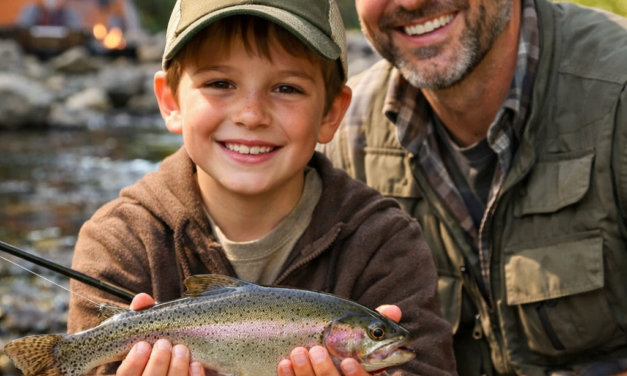
Free Fishing days for 2013 are July 6 and September 7
Have you ever felt the excitement of watching your bobber suddenly jiggle, then dive out of sight? Feel the tap-tap-tap of a bass as it tastes the worm on the end of your line? Or having a salmon practically tear the rod out of your hands as it smashes your lure? What’s that? You say you never learned to fish?
If you are new to the sport of fishing, and not sure if you will enjoy it, a great opportunity awaits you. CDFW offers two Free Fishing Days each year. On these days, you can fish without a sport fishing license. Free Fishing Days provide a great, low-cost way to give fishing a try. Some CDFW Regions offer a Fishing in the City program where you can go fishing in the middle of major metropolitan areas perhaps just a few blocks from your home. Fishing in the City and free fishing day clinics are designed to educate novice anglers about fishing ethics, fish habits, effective methods for catching fish, and fishing tackle. You can even learn how to clean and prepare your catch so you can enjoy it for dinner that night.
While all fishing regulations, such as bag and size limits, gear restrictions, report card requirements, fishing hours and stream closures remain in effect, there are two days each year when anyone can fish without purchasing a fishing license.
On Free Fishing Days, every angler must have the appropriate report card if they are fishing for (if applicable):
• abalone
• steelhead
• sturgeon
• spiny lobster
or salmon in the Smith and Klamath-Trinity River Systems.
Share Mountain Valley Living with your friends:
Fly Fishing Casting Basics
Courtesy of Takemefishing.org
In spin casting, the weight of the lure pulls the line off the reel. In fly casting, the weight of the line carries the fly to the fish. In fly casting, you must learn to use the fly rod to cast the weight of the fly line. You can do that quickly by following five basic principles of good fly casting:
• 1) The fly line (and fly) goes in the direction you point the fly rod tip during the cast.
• 2) Good fly casting is not strength-related; it is timing-related. You need to practice the timing of the cast to become a good caster. It takes 15 minutes a day for about a month to become a good fly caster.
• 3) Proper stroking and stopping of the fly rod are fundamental to good fly casting. The caster loads energy into the fly rod during the casting stroke. The fly rod releases the energy into the fly line in the cast. The fly caster loads a little energy (a short, low-energy stroke) into the top of the fly rod for short casts; he loads a lot of energy (a short, powerful stroke) into the middle and bottom of the fly rod for a long cast.
• 4) Casting arcs (the arc the rod makes in the air during the cast) in fly fishing are small for short casts and large for long casts.
• 5) Stopping the fly rod after the casting stroke is critical to forming the casting loop, and it allows the fly rod to unload, thereby casting the line.
Fly fishermen seldom need to cast more than 50 feet when fishing, but becoming proficient at long-distance fly casting can improve all your casting. You should learn to cast short (30 feet) first, and then practice at greater and greater distances.
You can’t learn fly casting from a book. You need to just do it. The more you practice, the better you’ll become. Practice on a lawn or pool. Casting while fly fishing is not practice. Practice allows you to focus on casting fundamentals without distractions.
Getting Started
The best way to learn fly casting is from an expert instructor. If one is not available, take your balanced fly rod, fly reel and fly line to your backyard. You’ll need at least 120 feet (60 feet in each direction) of lawn with no overhead obstructions.
Mark your fly line with an indelible marker at 30 feet. The marker will indicate how much line you have out when you cast. Also place hats or some other objects on the lawn 30 and 60 feet from where you will stand. The markers will help you develop the sense of distance that is critical in casting accurately to fly fish.
The Grip
Grasp the fly rod firmly with your casting hand and place your thumb on top of the rod grip. When you are learning to cast, keep the fly rod butt under and in line with your wrist and forearm. That way, the rod will remain in plane during your cast. If the fly rod comes out of plane during the cast, the tip wanders and the fly line follows the tip, wandering and spoiling the cast. Stand on the lawn with your feet slightly apart. Thread the line off the reel and up through the line guides and out the tip top of the fly rod. Tie a 9-foot leader to the end of the fly line using the tube knot and tie a small piece of yarn to the end of the fly tippet. Pull about 20 feet of line off the fly reel and lay it out on the lawn to the right of where you stand (to the left if you are left-handed). Make sure the fly line is drawn tight on the lawn and is not lying in S-curves or it will not cast well.
Using a horizontal side-arm cast, flick the fly rod tip forward from your right to your left (from your left to your right if you are left-handed), and watch the fly line form a loop and roll out to your left and then settle to the grass.
Using your arm and a flick of your wrist together (the way you’d throw a Frisbee backward and a baseball forward), cast the fly line repeatedly back and forth in backcasts and forward casts. Try to make the line form candy cane-shaped loops in both your backcasts and forward casts. Loop formation is the intent of your fly casting – the tighter the loops, the better the cast.
As you stroke the rod back and forth, keep a firm wrist and stop the fly rod abruptly after each stroke. Stopping the rod allows the fly line to form a loop off the rod tip. It also allows the fly rod’s tip to turn over to unload energy into the fly line efficiently. The energy in the fly rod casts the line. You must stop the rod when making both the forward cast and the backcast to become a good fly fishing caster.
After casting sidearm for 15 minutes, or until you feel comfortable with the feel of the fly line and fly rod, try casting the rod at a 45-degree angle and then vertically. You’ll use all these casting positions when you are fly fishing, so get used to them. You want to groove your casting stroke in the position that is most comfortable for you: sidearm, 45 degrees or vertical. The fly fishing casting principles remain the same for all casting positions. The sidearm cast allows you to watch the line and thus to teach yourself timing and loop formation.
Aiming the Cast
For short casts, you aim about 4 feet above the water (or lawn). As your casts get longer, aim higher to allow the line and fly more time to reach the target. Learning to aim accurately is a hallmark of expert fly casting. Practice makes perfect, so practice.
Share Mountain Valley Living with your friends:
By Melissa Wynn
Wildlife abounds in our neck of the woods but not all of our animal neighbors are warm and fuzzy. A select few are cold blooded, slither and come equipped with a deadly liquid poison known as venom. California hosts six venomous species of snakes. All six are Rattlesnakes:
• Southern Pacific Rattlesnake
• Sidewinder
• Speckled Rattlesnake
• Red Diamond Rattlesnake
• Western Diamond Back
• Mojave Rattlesnake
We all know these venomous vipers make the hair on the back our neck stand on end when they earn their name by shaking the rattle at the end of their tail. Here are a few things you may not know:
• Of 8,000 cases of venom poisoning per year in all of North America, only 10-15 result in fatalities.
• In many snakes, the left lung is reduced or absent.
• Some snakes lay eggs and others give birth to live young, such as the Rattlesnake.
• Venom is a prey immobilization adaptation in snakes, defense is secondary.
• Venom is 90% protein.
• Venom is composed of neurotoxins (attack nervous system) and/or hemotoxins (attack circulatory system)
• Rattlesnakes can meter the amount of venom injected when they strike.
• Rattlesnakes gain a new section to their rattle each time they shed their skin.
Many people fear snakes because of their creepy appearance and forget their importance in the natural world. Most are harmless creatures that play a vital role in their ecosystems as highly skilled predators of rodents.
Common sense is the best protection against Rattlesnakes when wandering in the nature. Watch where you place your hands, where you place your feet, and where you sit. If you find a snake, LEAVE IT ALONE! Give it plenty of space and safely enjoy the great outdoors.
Facts Courtesy of sbsc.wr.usgs.gov
Share Mountain Valley Living with your friends:
In my opinion Lake Almanor offers some of the most pristine fishing in all of California. It supports healthy populations of quality trout and salmon. Because I enjoy the challenge of trolling for these elusive fish, it is where I concentrate my efforts.
When folks ask me what’s the best time of the year to catch fish the answer comes easily, the last two weeks of June and the first two weeks of July although you truly can catch quality fish all year round.
When they ask “Where and how we can catch some of these fish?” the answer becomes a bit more complicated. All fish species prefer a specific water temperature range. Salmon do best in water of about 54 degrees F. and trout like it about 59 degrees. So when the lake temperature is colder than that, fish in or near the shallower parts of the lake. In the summertime when the lake water surface temperature is in the mid to high 70’s, fish in or near where the water is deeper. The fish do move in and out of their “comfort zone” primarily for one reason-food.
Every time I think I have figured out what bait or lures are working best I get into a slump and then I hear some other fishermen sharing (bragging) of their success with some lure or bait and scent concoction that I have never heard of. Over the years, I have come to the conclusion that it is not so much what you fish with, but more importantly how and where you fish.
I almost always start out my day with at least one rod trolling blades with a half night crawler threaded onto a #4 bait holder hook. My second rod very often will have a small lure attached by a leader behind some blades. I troll the blades at 1.7 MPH, a little faster 2.0 MPH for lures only and slower at 1.0 MPH for threaded worms without blades. The most important thing about what tackle or technique to use is, if you are not getting any hits,-DO SOMETHING DIFFERENT! Change the boat speed, the fishing depth, location and/or the bait.
Where to fish? Never forget that all fish are “object freaks”. Use a good lake map to show you where the underwater points and drop offs are located. If you have a depth finder look for weed beds and rock piles that will attract and hold fish. I have figured out that I catch more fish where there is a sloping flat area near a drop off or deep channel. I think the bait fish are concentrated on the slopes and the game fish are below (looking up) for their next meal.
Having fished Lake Almanor for over 35 years there are many days that I have been very successful and like everybody else, other days that I don’t want to talk about. One thing for certain, I do enjoy hearing from folks to share info on what is working or not working. I look forward to hearing from you this summer.
Bob Kopernik
Lucky Grady Fishing Guide Service
408.515.1503 VHF Radio Channel 69
Share Mountain Valley Living with your friends:
Three Fantastic Falls Of McCloud
By Melissa Wynn
Where in the world can you see three waterfalls along one long path? McCloud, Ca is the place my Mountain Valley friends. Dubbed the Upper, Middle and Lower McCloud Falls these rushing waters are a must see when visiting the McCloud area. Signs to lead the way are sparse but, coming from Burney Falls, on Hwy 89 North make a left at the turn off for a campground called Fowlers. Proceed about 5 miles until you reach the marked turn for upper falls. Meander this road to explore all three falls and loop back to Hwy 89.
Share Mountain Valley Living with your friends:
Mid-Summer Madness 2013 Planned For Foxwood
The Rotary Club of Chester and the Lake Almanor Elks Lodge #2626 have joined together to present the Fourth Annual Mid-Summer Madness to again be held at the Foxwoods Park in their premier setting among the pines and lush landscaping event at Lake Almanor Saturday, July 27.
The Rotarians and the Elks represent two of the largest charitable organizations serving the Lake Almanor area. By joining forces for this popular event, they are able to maximize their manpower and resources to provide an exceptional evening of great food, wine, and spirits from some of the finest restaurants and wineries. Local artisans will also be on hand to display their wares.
The evening also includes both a silent auction, and a live auction of some fabulous prizes that will go to the highest bidder. Music and dancing will follow in the Foxwood Pavillion. Serving over 400 participants in prior years, this is a “don’t miss it” evening.
The funds raised will remain in the local community, funding both the Rotarians and the Elks scholarships to local high school students, as well as financial support for youth programs and activities in the Lake Almanor area.
Tickets are limited or this once a year affair. For information and tickets call (530) 258-2516, or go to www.MidSummerMadness.info.
Share Mountain Valley Living with your friends:
Cutting Firewood Safely
By Melissa Wynn
One of the best parts of living in the woods is a crackling fire in the fireplace, reminding us all that it’s that time of year to fill the wood shed once again. Gathering firewood can be a great way to spend a family weekend as long as everyone is aware of the dangers.
Running a chainsaw is serious business and safety precautions like heavy eye protection, sturdy gloves, ear plugs and a durable hard hat are a must. Accidents happen, so it is always a good idea to have at least one buddy along when felling trees and bucking up logs in the woods. A helping hand is also a plus when it is time to load the heavier rounds into the truck.
Tree felling requires skill, technique and practice. Always consult an experienced faller and go along for the ride a few times to watch and learn before ever trying to fall a tree. Please consider these common dangers of tree felling listed by OSHA:
Throwback. As a tree falls through other trees and lands, branches and other objects may get thrown back toward the logger. To prevent this, avoid felling trees onto other trees or objects. Do not turn your back on the tree as it falls, look up as you escape along the retreat path.
Terrain. Hazardous conditions can be created when a tree is felled onto stumps, rocks or uneven ground. If possible, move obstacles in the way of the falling tree or change the felling direction.
Lodged Tree. Trees do not always fall all the way to the ground, and instead must be pushed or pulled down by a machine.
Widow Maker. This refers to broken limbs hanging freely in the tree to be felled or in other trees nearby. Knock down all of these branches or pull them down before beginning work. Never work underneath them.
Snag. This term refers to a standing dead, rotting or broken tree positioned near the tree to be felled. Use a machine to bring these trees down before beginning work. It must be felled or avoided by at least two tree lengths.
Spring Pole. This is a tree, limb or sapling that is under tension due to the weight of another tree or object. Use a machine or chain saw to release the tension before beginning work in the area.
Know the dangers and cut safely! Wood cutting permits are required and available at your local forestry office.
OSHA tips courtesy of www.nsc.org
Share Mountain Valley Living with your friends:
By Melissa Wynn
Come wet a line with us and help support Eastern Plumas Rural Fire Protection District and Water Rescue Equipment at the annual Lake Davis Spring Fishing Derby. Prizes, including money and next years entry, will be awarded in categories for adults and juniors (under 16). Also, bring your favorite youngster to enter in the Dad & Me category. Even a prize for the smallest fish will be awarded, along with many more prizes in the raffle drawing.
Headquarters for this “fish on” favorite will be at J&J’s Grizzly Store and Camping Resort at 7552 Lake Davis Road at Lake Davis near Portola, Ca.
You can register for the derby at headquarters until 8:00 pm on June 14th. Registration is available until noon in Portola at K&S Market, Leonard’s Market, Firehouse Thrift and Valu-Wide Discount. Graegle residents and visitors can also sign up until noon at the Graegle Frosty. Derby entries on derby day will be taken at headquarters and at Honker Cove boat ramp.Entry forms are available online at www.graeagleplumas.com/springderby.html. Entry fees are $20 to pre-register and $25 on derby day. For more information contact Jeanne by phone at 530- 832-0270. Come on out and bait a hook!
Share Mountain Valley Living with your friends:
Enjoy the Seasons of Mt. Lassen
By Jaime Vega
On top of the enormous Lassen Volcanic National Park sits perfectly the radiant, most dazzling lake I’ve ever seen in my life. Emerald Lake is very well known for its breathtaking color and clarity, in the summer, that is. Don’t let its beauty fool you into jumping in for a swim, because the lake consists of fresh water runoff from the melted snow in the mountains, meaning it is very cold. The lake is a sight to behold during any season of the year. There is always something beautiful and worth seeing during each visit.
November through April the mountain and the surroundings are covered in the most massive white blanket of snow, which reaches as high as 700 inches! You cannot see the lake at this point of time, but seeing that much snow is one of the shocking experiences ever. Driving around Mountain Lassen Park during the colder months is like a winter wonderland; as you get closer to the peak the road stops. From here you can get out of your vehicle and enjoy the magnificent views. Be sure to wear sun block and protective eye wear as well. The snow brightens the scene.
May through July is when the snow begins to melt and recede, revealing an immaculate palate of colorful plant life. The lake has started to thaw and show its true colors just as the landscape has. One of the exciting features this lake provides is an opportunity to sit along the shore and witness eagles hunting for fish. Since the snow is at its melting point, as you’re exploring around you can hear the ground splashing and grunting from the soft watery mud and rocks grinding against each other with each step you take.
August through October I would have to say is my favorite time to visit Lassen Volcanic National Park. By this time most of the snow is gone and the lake is looking its best. The weather at the park is usually nice in the fall. For this reason my family and I always take along a picnic so we can hike around, and then eat lunch after. I have been going there since I was a little kid, My dad showed me a special spot. Ever since then we have been returning every year. It reminds my family and I of all the great times we’ve had with my father.
One of my favorite things to do when I’m there is skip rocks and just clear my mind and forget about everything that has been going on while I breathe in that fresh pine scent, enjoying the peace and quiet. All I hear is a stream of water, the eagles calling up above, frogs splashing on the shore line and a cricket or two a couple feet away. After you’ve spent a day out there and you’re relaxed, it’s back to reality and hoping you get the time to come back soon.
Share Mountain Valley Living with your friends:
By Melissa Wynn
Photos Courtesy Of Pine Cone RV Park
Every May, when the promise of summer lingers in the breeze, Richard and Marge Fernandez hook up their twenty-nine foot Challenger fifth wheel and leave Magalia for their Lake Almanor summer home at Pine Cone Lodge RV Park. As they pull into the driveway Richard knows his first fishing trip of the year is just minutes away.
“ This is the nicest park on the lake.” Claims Fernandez. “ They even set and level the fifth wheel while we make our first troll for trout. I don’t worry about the boat either. My (boat) slip is included in the space rent and it’s waiting in the water when we get here. When we leave in October they will pull it out, winterize it, wrap it and store it indoors until we come again in May. Outstanding service has brought us back to Pine Cone Lodge eight years running.”
By the time Richard and Marge float in with the first days catch their summer home is ready to go. Each week the staff mows the little lawn and empties the waste can at their beautiful, lakefront, full hook up rv sight. Three minutes from the front door to the boat, and no chores, can’t beat that!
Year after year this lovely couple reunites with the same crowd of summer friends, from the Reno Sparks area, that also call this mountain paradise home for the summer. Lazy sunset strolls on the sandy beach and many a night around a crackling campfire strengthen these special friendships that span decades and the map.
The possibilities are endless in our shady Mountain Valley neighborhood. RV parks, campgrounds and National Forests dot the map from Redding to Reno, Mount Shasta to the sprawling valley near Chico. Be ye gambler, fisherman, prospector or extreme outdoorsman there is an RV community to fit your personality near the outdoor adventure that calls to you.
Hook up your favorite home on wheels and drop in on Richard and Marge, test the sparkling waters of Lake Almanor and maybe Pine Cone Lodge RV Park will become your place to spend the summer worry free in your RV.
Share Mountain Valley Living with your friends:
By Melissa Wynn
I was so excited when photos of wolverines were captured proving that these shy and illusive creatures still exist wild in the Sierra. The photos were taken right next door in Tahoe National Forest, so it isn’t far fetched that Plumas or Lassen National Forest might have a yet undiscovered population as well.
I believe I saw a wolverine in Seneca canyon in the mid eighties but there must be a photo or some other tangible evidence to be a documentable sighting. Have you ever seen a wolverine in Plumas or Lassen National Forest? We would be thrilled to discover that one of our readers documented the first Plumas or Lassen National Forest wolverine sighting.
Many outdoors enthusiasts who thought they saw a wolverine in fact saw a North American Badger. The two are quite different and it is easy to tell them apart when you know what you are looking for.
The North American Badger is known for its short and stocky build. The mostly black legs are short and the grizzled looking, grayish body is wide and almost flat, like a footstool. Unique facial markings however are what really tell that a badger is a badger. The nose and snout are black and the black continues between the eyes and up over the head. A broad white stripe divides the black from the center of the snout up over the top of the stubby-eared head.Cream colored or white cheeks, chin and under belly top off the tuxedoed appearance of the bossy badger.
Wolverines wear a totally different coat and build than the badger. Wolverine fur is long and often sports a dark reddish brown saddle marking. A lighter coat color extends from the wide black snout and face, over the head and surrounding the saddle to the base of a long shaggy black tail. The sturdy black legs can move these mysterious critters over mountain tops at speeds of forty miles per day.
Badgers and wolverines are both dangerous, wild animals. Never approach them! Snap a photo from a safe distance or gather a hair or scat sample once they’ve gone to document your sighting.
Share Mountain Valley Living with your friends:
Bucks Lake
Family Playground/ Fisherman’s Paradise
Special to Mountain Valley Living Magazine
By Bryan Roccucci
photos by Bryan Roccucci
Located a short 17 mile drive from the town of Quincy, California is Bucks Lake. Bucks lies in a beautiful granite basin surrounded by tall evergreens at 5200 feet, and has often been referred to as the centerpiece of recreation in Central Plumas County. The dam was completed in 1928, transforming the lush Bucks Valley into the present day Bucks Lake and bringing it into what is now P.G.&E.’s California Hydro-electric Project. The lake itself has 14 miles of shoreline and roughly 1800 surface acres and is fed by five tributaries, which keep the average water temperatures cool and perfect for trout. Most of the lake’s northern shoreline is surrounded by wilderness and scenic views, while the southern side of the lake is dotted with cabins located on P.G.&E. and Forest Service leased land. This is also where you will find most of the services.
Bucks Lake has just the right amount of services available to travelers, families and fishermen alike. There are several lodges at the lake offering cabin rentals, motel rooms, restaurants and supplies. Two marinas offer docks, fuel, boat rentals, and other services to the boater and fisherman. There is also a quaint bed and breakfast/ store built on the site of a historic resort from Bucks Lake’s past. These businesses are all small family owned affairs and you can expect service that reflects that. If camping is more your style; there are a variety of campgrounds, both public and private, that are on or near the lake.
Bucks Lake offers year round recreation with cross country skiing, snow shoeing and snowmobiling being the most popular in winter. During the summer months, it is a popular spot for hiking, mountain biking, boating and of course fishing. Despite its popularity, it never really seems crowded. It is not uncommon at peak season to only see several other boats out in the early morning fishing. The peak season at the lake runs from Memorial Day weekend until Labor Day, but savvy fishermen know that some of the best action happens in spring and fall.
Fishing is probably the most common reason people venture to Bucks Lake. With five species of sport fish waiting to be caught; at Bucks something is always biting. Bucks Lake has always been known as a solid fishery for both Browns and Rainbows and many historical accounts often refer to both good quality and quantity. In the last 10 to 15 years Bucks has also been making a name for itself with the trophy Mackinaw that have been caught. Mackinaw or Lake Trout (actually, like Brook Trout, not even a trout but a member of the Char family) are probably most well know as the sport fish of Lake Tahoe. They also inhabit a number of Sierra lakes. Mackinaw can grow to very large size (as evidenced by the Bucks Lake record of 30 pounds) if the right conditions exist, and one of the biggest factors is food. These fish require large amounts of food to support their metabolism, which brings me to another of the five species found in the lake- Kokanee.
Kokanee, which are freshwater Sockeye Salmon, were originally planted into Bucks Lake in the 1950’s and found the lake’s conditions to their liking. The Kokanee population at Bucks exploded despite efforts to reduce their numbers and now can be seen each fall in large numbers spawning in Bucks Creek. In addition to providing the Mackinaw with a meal, they also have become a favorite target of many anglers, providing a great battle for their size as well as excellent table fare. Brook Trout, the last of the five species, provide great action all summer long. Most of the time these fish are found at or near the mouth of the lake’s tributaries taking advantage of the cool water entering the lake.
Shoreline access for anglers is abundant and literally surrounds the lake. Access can range from spots that can be driven to or are reached by short walks. The most common technique employed by shore based anglers at Bucks is bait fishing. Bait such as night crawlers, power bait, and salmon eggs are the most used. Casting lures from shore can also produce fish. Classic lures like Kastmasters, spinners and small Rapalas are some of the favorites. Most of the fish taken by “bankies” are Browns, Bows, or Brookies.
Boat fishing at Bucks is both popular and productive. Bait fishing often occurs in the same areas as the bank fishing but a boat offers the angler access to much more water. Most boats seen on the lake will be trolling. Trolling is one method that can consistently produce all five species of fish just by changing tackle, depth and location. Many types of tackle will produce trout from flasher/worm combos to hardware like spoons and spinners in a variety of colors. In order for me to diagram the tackle used to catch Kokanee I would need a lot more space than the editors are willing to grant me. Brightly colored lures, dodgers and spinners are at the foundation of any Kokanee box. To single out a few that seem to work best at Bucks; I would say color combinations of watermelon and pink are consistently good. (Always tipped with corn) Most of the Mackinaw caught each year at Bucks Lake fall to boat fishermen. Trolling large lures that resemble Kokanee or other fish is very productive. Vertical jigging is another method used to trigger stubborn Mackinaw to strike, and works well during the summer months when fish are hugging the bottom. While Bucks holds good numbers of trophy Mackinaw, they are not the easiest fish to catch and are very temperamental. Small fluctuations in water levels, temperatures and the weather can turn their bite on and off like the flipping of a switch. The prime time for the “Macs” is early season, just after ice out, through June.
Fly-fishing can also be very exciting at Bucks. Casting small wet flies during spring and summer near the mouths of the tributaries will usually produce fish. If you have a tube or small boat, even better; this will increase your opportunities. In Fall, float tubes are king. Every year during the late season fly anglers in tubes account for some of the nicest fish caught on the lake.
Note: There are two roads that lead to Bucks Lake from the Quincy side. Just after the town of Meadow Valley the road splits, to the right, Bucks Lake Road climbs quickly, wrapping you through a series of sharp narrow corners to the top at Bucks Summit and is not recommended for RV and larger boats and trailers. To the left, you will find Big Creek Road which is longer but a much more gentle grade and wider roadway. From the west, Bucks Lake can be accessed via the Quincy-Oro Highway, a two lane road leaving the town of Oroville. This road was once very steep and narrow, but in recent years much work has been done, and it is now a nice drive and easily accessible with RVs and trailers. One word of caution; because none of these roads are maintained during winter past certain points, it is wise to check with local authorities as to their status before heading up, especially early and late in the season. Usually the first springtime access to the lake will occur from the Quincy side, followed later by the Oroville side.
About the author:
Capt. Bryan Roccucci is a full time professional fishing guide and operator of Big Daddy’s Guide Service. Bryan specializes in year round trophy trout fishing while emphasizing light tackle fishing techniques on Lake Almanor (Jan.-May), Lake Davis (May), Bucks Lake (May – Sept.), Lake Tahoe (June – Sept.) and Eagle Lake (Sept. – Dec.) To book a trip on Bucks Lake or any of the other waters fished by Bryan or for more information please visit www.bigdaddyfishing.com or call (530) 283-4103.
Copyright © 2013 Bryan Roccucci All Rights Reserved
Share Mountain Valley Living with your friends:
Exercise In The Peace Of Nature
Lake Almanor Recreation Trail
By Melissa Wynn
We all know that simply walking is one of the best things we can do for our own good health. Treadmills are boring, so why not do your walking on the banks of Lake Almanor in the shadow of majestic Mount Lassen? The Lake Almanor Recreation Trail is just the place to breath fresh mountain air while wandering among the pines. Exercise doesn’t have to be strenuous, mountain meandering is healthy for the body and the soul.
Lake Almanor Recreation Trail is an easy to moderate hike that winds along 9.5 miles of the sparkling West Shore of Lake Almanor parallel to Hwy 89. Whether you are walking, running, jogging or bicycling you are sure to catch a glimpse of the local bald eagles, osprey, deer and other friends of the forest. Relaxing vistas and subtle elevation changes make for a great, low impact, calorie burning afternoon.
Popular access points along Hwy 89 include…
- Canyon Dam Boat Launch
- Rocky Point Campground
- Almanor West Campground
- Cedar Chalet Bakery (intersection of HWY 36 and HWY 89)
Join us for some exercise in the peace of nature. It’s an outing, not a workout!
Share Mountain Valley Living with your friends:
Water Craft Maintenance Courtesy Of Paul’s Automotive
Warm weather is here! The lake is calling you to come out and play. The wind, the speed, the waves… but wait… did you forget to service your pleasure boat or personal water craft? They require regular oil changes. The frequency will vary by model, but a good rule of thumb is to change the oil every 100 hours of operation or at least once a year. Remember, your valued investment and summer toy has been sitting approximately a year and needs attention before hitting the water.
If you remembered to winterized your toy you need to re-install the fluids, drain plugs, replace the filter, make sure the battery is charged, and check the ignition system. If you forgot to winterize your toy, you may have other issues occurring that you do not want to find out about on the middle of a lake.
I always forget about my trailer. I admit I have been stuck on the side of the road just because I did not think about repacking those wheel bearings after dunking that trailer in and out of the lake the year before.
Trailer lights, do they still work? Are any of the wires hanging? What shape are the tires in? Is it time for trailer brakes? A curvy, steep road with no place to pull over is not the time to find these things out.
Ensure that your bilge (force) pump is functioning properly. Having your boat sink is a sure fire way to dampen your outing. The correct battery and condition of battery is essential to the length of time the pump will run and may be the difference between a new found lake reef or getting your boat back to dry land.
What about the vehicle you are using to tow your toy? Is it ready for summer fun? Pulling a loaded trailer is a lot of work for your vehicle. Your vehicle needs to be in the best operating condition possible. I offer a summer special that includes (for most vehicles): Oil Service, Brake Inspection, Starting / Charging System Testing, AC Service and Pressure Test of Cooling/ Heating systems. Bring your vehicle and summer toy in together to help limit the amount of time you spend in a shop instead of at the lake.
Remember to check your emergency kits too! Everyone should have an emergency kit in their vehicle. It is recommended to have flares, duct and electrical tape, drinking water, a first aid kit, blankets, clothing, a hand held radio, engine oil, washer fluid, coolant and a flashlight. Be sure to check or change your flashlight and radio batteries before every trip. The same kit should be in your boat with these additions: a water-resistant dry box to store your items in, a tarp, spark plugs, spare fuel hose / line, an incredibly loud air horn, aerial flares (flare gun), and a highly visible distress flag. Ask your Harbor Master if you should have other supplies based on the body of water you are enjoying that day.
Take care of your toys before your day of fun turns into a day that is done.
Share Mountain Valley Living with your friends:
Greenhorn Guest Ranch-A Step Back In Time
Imagine loading your young family, and all your worldly goods into a covered wagon and embarking on a seven month journey over rough and dangerous terrain to a place you know little about. That’s what the original owners of Greenhorn Guest Ranch did when they headed west in 1853 to settle in the lush Mohawk Valley near Quincy, CA.
The rich heritage is brought to life today by owner Trish Wilburn who has created an internationally known vacation spot complete with Old West hospitality and activities set in tranquil, yet awe inspiring Plumas County.
Choices are boundless when it comes to activities Greenhorn offers miles of trails for horseback riding, wagon rides, cookouts, fishing, and swimming.
Rodeo games are ever popular, along with other sports and games. Bonfire sing-alongs never run out of style while the fully stocked Saloon offers western dancing and Karoke.
Exploring the nearby areas you’ll find 292 miles of scenic trails, fishing, gold panning, rafting, sailing, spectacular drives and historic finds.
Friday Nights feature an “All You Can Eat” Rib and Chicken Bar-B-Q. Visitors and locals gather early to take a horseback or horse-drawn wagon ride before dinner, or opt to hike, fish or take a dip in the heated pool.
Destination weddings are a specialty at Greenhorn Ranch. They can accommodate up to 100 people, and create the wedding of your dreams. Family reunions and other special gatherings also find a “home away from home” here.
“Meetings and Retreats at Greenhorn Ranch are like none other,” says Trish. “We feature a majestic Greenhorn Guest Ranch Plumas county setting, rustic accommodations, room to breathe and an optimal space to conduct effective meetings and meaningful retreats.” Fly into Reno-Tahoe Airport 70 miles away, or Gansner Aiprort in Quincy just 12 miles away.
Perhaps better yet is the budget pleasing value. Your vacation or getaway is all inclusive, so you don’t have to worry about the cost building up after you get there. There is no minimum stay required. Group rates are available, and are tailored to your needs.
Share Mountain Valley Living with your friends:
Indoors Pool Adds to Family Fun in Anderson
By Eileen Majors
If you are looking for a getaway that the whole family will enjoy, consider some fun in Anderson, CA. We went to research some of the best fishing in the state, along the Sacramento River, and ended up stumbling onto a really fun family trip.
It is always nice to descend from the mountains to a lower elevation in the springtime to feel the warmer weather, and that was my idea. We were pleasantly surprised upon arrival. The Baymont Inn in Anderson has a really nice indoor pool and spa area. It was then I realized I wished I had brought some kids along. There is plenty to do in Anderson so definitely bring the whole family. The outlet stores stretched across the parking lot that lead out of our hotel. We found Mary’s Pizza Shack also in the shopping center where we enjoyed a really nice dinner. There are Mary’s’ shacks spread from there to the bay area, and it is obvious why they are so successful. We will be heading back there for more dining fun son.
The Jolly Giant Flea Market is another fun family stop and it is not far from our cozy room at the Baymont Inn in Anderson. With fabulous finds from antiques to produce and tools, this place is indoors and is well worth a look.
As soon as we arrived at the Baymont, our gracious hostess Karen pointed out the fresh coffee station where flavored creamer and half and half are dispensed. You can enjoy a hot beverage and watch the kids swim. The Baymont Inn is also located just down the road from the fairground which gets pretty important this time of year. The Shasta District Fair will take center stage June 12 through 15, 2013. The theme this year is “Let Freedom Ring”.
We arrived for our stay and were immediately pleased to see the sparkling indoor pool next to the lobby. We were warmly greeted by manager Karen.
She pointed out the 24-hour fresh coffee in the big “stay fresh” hot pots along with the dispenser next to it for CoffeeMate® or half and half. I’m happy. Our room had just been renovated in rich colors with comfortable beds too.
Check out Anderson for family fun and great fishing.
Share Mountain Valley Living with your friends:
By Melissa Wynn
We all love camping in the great outdoors. The birds sing by day and the frogs and crickets play the night show. But, when bedtime comes, not all of us are prepared to sleep on the ground in a sleeping bag. A bed and some running water isn’t too much to ask for is it?
These days, there is an RV or camp trailer to fit every lifestyle and budget. Don’t stay home, bring all the comforts camping with you in the home on wheels of your dreams. From the Grandma and Grandpa dragging the old silver Streamliner behind the station wagon, to the snow bird crowd that sports luxury modern RV models, the irresistible summer season brings us together year after year.
What is your RV living style? Do you prefer the simple shelter with the bed, stove and refrigerator basics? Maybe some propane lighting to play cards by at night is all you need during your commune with nature. Perhaps you are the type to go all out. Bring on the best with recliners, microwave and satellite tv on an HD flat screen. Slide out the extra space in the living area and invite that nice couple you met at your favorite campground last year. Many of these priceless summer friendships last a lifetime.
Our amazing Sierra mountain home hosts an amazing number of world class fishing opportunities. Whether you prefer stream, river or lake, trout bass or salmon there is an RV friendly campground nearby to call home for as long as you feel like.
Life is short friends and neighbors, explore the mountains and the valleys. Step away from the rush and demands of life now and then. Hike a hillside or meander a meadow, bring the RV and spend a few days. Rugged tent camping can be great fun but there is no reason that camping can’t be comfortable. Pack up your portable home and join us in some Mountain Valley RV Living!
Share Mountain Valley Living with your friends:
By Charles P. Watson
Everyone is talking about GOLD. The elusive yellow metal has been sought after for thousands of years, been the cause of wars, the pillaging of cities and nations, but is also a symbol of affection and love. It is precious, it is valuable and it is very, very pretty. The history of gold is riddled with tall tales, folk lore, and exaggerations that would make the less inclined scoff and say “bah humbug! There’s no more gold out there!” But knowledgeable miners and prospectors of today are still finding gold in them thar hills, and many are becoming pretty darn rich – and having fun doing it!
Plumas County is one of the richest gold-bearing counties in California, with nearly every creek, stream and river showing some sort of color. Tailings from the historic prospectors are common along the stream banks, but as we all know their equipment was inefficient and they missed a lot!!
There are two sources of gold, either lode or placer. Lode is bedrock gold. It is often associated with quartz veins or fractures that often look like the rocks were baked at a high temperature. The process on how the gold was trapped in the quartz is complicated but usually involves intense geothermal processes at some great depth below the surface. Over time, the overburden is eroded away exposing the veins whereby today’s prospectors can now see them.
Mining of the lode deposit consists of digging out the vein, crushing the material, and separating the gold from the rock. The gold is usually chunky and looks like Grapenuts. Crushers come in various shapes and sizes. On a small scale, the most common method is a heavy chain whirling at high speeds in a bell housing. There is a portal whereby appropriately sized rock chunks are fed into the machine. There is a screen that allows only the fine dust (-100 mesh) to pass through. Once powered up, the prospector can use either water or chemicals to recover the gold.
Gold is soluble in a number of solutions and once in solution, it can be precipitated back out as pure gold. Just like salt dissolves in water, gold dissolves in mercury, cyanide, aqua regia, bromide or bromine salts, thiourea, thiosulfates and many more. Mercury and cyanide are toxic and not advised for the small prospector, but other chemicals are environmentally and easy to use. Precipitation of gold in solutions is as easy as putting an electrical charge to a zinc plate. The gold ion is replaced by zinc and merely falls out of the solution. Just heat up the precipitate and pour your gold bars.
There are do-it-yourself gold leaching kits on the markets that work quite effectively. It is not rocket science, but it does take some common sense and safety precautions to recover gold from lode sources. The hard part is digging it out of the vein – and that can be backbreaking!
Placer gold is where the gold has been eroded from the bedrock and is now found in the stream gravels. It is usually free gold, but sometimes has bits of quartz or country-rock still attached. Since it has tumbled down the river, the edges are rounded – hence, the term nuggets!
Where do you find the placer gold? Most of the time it is at the bottom of the gravel deposit on the bedrock. Gold is the heaviest object in the stream so the gold will tend to bounce along the bedrock, often getting caught in cracks and fractures. Moss tends to be the natural carpet of the stream and will allow the gold to nestle-down and become trapped. Grass clumps and tree roots act the same way.
Although modern-day prospectors have a lot of tools at their disposal to mine for gold, including excavators, dozers, and trommels, the old pick ‘n shovel and pan are still the preferred method. Suction dredging currently is not allowed in active waterways in the State of California, but there are several less evasive methods available to the prospector to recover the gold, such as a sluicebox or highbanker. A sediment transfer system (STS) can replace the suction dredge to suction the sediment from the bottom of the stream. Please consult your local prospector supplier or a knowledgeable geologist for more details.
Gold mining is not a new thing, it is something within our blood – something that we feel is right. Today’s miners are smarter than ever before. They have better tools to recover the metal and the wisdom to work with Mother Nature. Today’s miners are responsible citizens and reclamation is part of the mining process.
It is a thrill to find your first gold speck, flake or nugget. Once you do, you will be hooked forever. It is fun for the whole family and who knows, maybe, just maybe, if you are a wee bit lucky… you too will jump for joy, click your heels and shout “Eureka! I found it!”
Charles P. Watson is the chief geologist at Advanced Geologic Exploration located in Chester, California. He can be reached at cwatson@advancedgeologic.com or at www.advancedgeologic.com
Share Mountain Valley Living with your friends:
 [/media-credit] Yes, This Pool is Fed by Hot Springs; Do make reservations early for dining and lodging here!
Chester, CALIF. — To keep attracting families to Drakesbad Guest Ranch in Lassen Volcanic National Park, park concessionaire California Guest Services (CGS) has dropped the cost of a family’s four-night stay by $700.
“Families have been hit particularly hard by the economy in recent years, and that’s resulted in a decline in the number of families that stay at Drakesbad,” said CGS President, John Koeberer, “We looked at why it was happening and concluded, we were pricing families out.”
Because Drakesbad is so far away from the next nearest place to eat (17 miles), meals are included in the cost of each guest’s accommodations, which are charged on a per-person basis per room. That meant additional expense for cost-conscious families. Koeberer explained, “We didn’t want to lose the family character of Drakesbad. So, we decided not to charge for kids. Now, with each paying adult, one child can stay free in the same room, including their meals and new kids’ activities. Additional children in the same room cost $49 a night when under 12 years old and $69 a night when between 13 and 17 years old.”
Drakesbad has been a traditional summer destination for families who return to impart a love of nature and family togetherness to their children. The guest ranch is located in Lassen Volcanic’s remote Warner Valley at the end of a grassy, stream-fed mountain valley within short hikes of such hydrothermal wonders as: fumeroles, bubbling mudpots, steam vents, and a boiling lake.
Part of Drakesbad’s charm is its connection to the past. Children often build hand-crafted waterwheels to place in Warner Creek and leave spinning until winter snows wash them away. Favorite activities include swimming in the ranch’s hot-spring-fed swimming pool, horseback rides, fly-fishing and day hikes. Newly added this summer are weekday crafts, archery, swim time, hiking and star-gazing programs, led by a recreation director.
Because the lodge has only 19 rooms, reserving a room, cabin or bungalow as early as possible is recommended. Accommodations are most easily obtained from mid to late June, or from mid August through early October. Reservations can be made at www.drakesbad.com or by calling 866-999-0914. CGS is an authorized concessioner of the National Park Service.
Share Mountain Valley Living with your friends:
Situated between Susanville CA and Reno NV, and often referred to as MX395, the popular course is well known as one of the longest uphills in motocross. A 500’ elevation rise from the 40 bike start area to the top gives riders an awesome vantage point above the Honey Lake Valley.
Novice and mini bike riders share a portion of MX395 before decending on a separate section designed for their skill level. Younger riders enjoy a track designed just for them.
With plenty of room to watch the races, this family oriented park caters to everyone. Local non-profit organizations enjoy 100% profit of the revenue generated through their concession stands.
Here’s a sample of events this summer. For more information go to www.HoneyLakeMX.com, or call (530)249-5634.
June 8- 9th : Rd 5 SMRA Spring Series / HoneyLake GP
June 15th – 16th – Corey Herring Memorial
June 29-30th – AHRMA Post Vintage National
Sep 13-15th – WORCS Super Event
Share Mountain Valley Living with your friends:
• More than 90 percent of all gold ever used has been mined since 1848, when gold was discovered at Sutter’s Mill, California, sparking the greatest gold rush of all time.
• All the gold that has ever been refined throughout history could be placed in a cube measuring 65.5 feet per side.
• Gold nuggets (aka placer gold) are solid lumps of gold. Nuggets are rare, making up less than 2 percent of all native gold ever mined.
• It has been estimated that, worldwide, the total amount of gold ever mined is 152,000 metric tons, only enough to fill 60 tractor trailers.
• One ounce of gold can be stretched into a thin wire measuring only five microns, or five millionths of a meter. That would reach in a straight line a distance of 50 miles.
• Gold is so malleable that a single ounce of it (about the size of a quarter) can be beaten into a thin continuous sheet measuring roughly 100 square feet. That means it would take 576 ounces (or just 36 pounds) of gold to completely cover a football field.
Courtesy of The American Museum Of Natural History
www.amnh.org/
Share Mountain Valley Living with your friends:
Spring is here, It’s time to go Gold Mining!
By Charles P. Watson
Can you feel it? That tug on your soul, that calling from “them thar” hills, that burning, passionate desire to go gold mining again? The bitter cold is behind us and the snow is melting filling the drainages with the turbulent waters that you
know are bringing more gold down from the highlands – and you want some of
that!
And why not? The price of the yellow metal has remained above $1,500 per ounce for a few years now. It peaked in August 2011 at $1,910 and many economists are forecasting the price of gold will double or triple, or even rise much, much more. It is why people are trading in their briefcases, suits and ties for picks, shovels and pans. A record number of mining claims were filed in the last few years, mining supply dealers can’t keep equipment on the shelves, and people are re-learning the historic art of making a living off the land by mining
gold!
The history of gold is riddled with tall tales, folklore, and exaggerations that would make the less inclined scoff and say “bah humbug! There’s no more gold out
there!” But knowledgeable miners and prospectors of today are still finding gold,
and many are becoming pretty darn rich – and having fun doing it!
Of course there is still gold out there – lots of it!! The Gold Rush is on so don’t get left behind!!
Remember your California history? One of the largest gold areas in the Golden State is called the Mother Lode Belt – a 400 mile-long, 75 mile-wide swath of gold-bearing rocks and gravels in the foothills of the Sierra. Numerous old mining towns dot the map with names like Seneca, Quincy, Downieville, Nevada City, Placerville, Angles Camp, and Sonora. Each have their own history, how the gold was discovered, where the richer mines were, and who the people were, that found their fortunes. For some, it is the history of those times that provides them with their wealth, while for others; it is and will always be about the yellow metal. Both are compelling and each will change how you live your life.
Plumas County is the northern-most county in the Mother Lode Belt, and was one of the richest gold-bearing counties in California. The Plumas County Museum is a huge source of information of what happened in the county during the earlier gold rushes. Be sure to check out their exhibits too! The Plumas- Eureka State Park has wonderful displays as well. Find an expert, a geologist or miner, and learn from them. Research the internet for information, tips and techniques. You’ll find gold – there’s no doubt! There is still plenty of it out there
But what about the laws, rules and regulations? Didn’t California ban gold
mining? Well of course not! The laws have changed and the historic ways of rape and pillaging of the land is no longer tolerated. That is a good thing because there were some atrocious mining methods practiced in the past.
Today, recreational prospecting using picks, shovels, sluice boxes and pans can
be performed without permits. You can still use a highbanker (a sluice box with a
pump attachment) without a permit; however, you cannot dump the muddy water
directly into the stream. You need to find a way to keep the waters of the State of
California as clean as you can.
Once you move to the next level where your plan includes using larger equipment, such as backhoes, excavators, dozers, wash plants, etc., you must have a permit. The State of California wants the miner to think about their mining
activities and not only plan on how the mining will be conducted, but also how the land is reclaimed. The miners need to be conscious of keeping surface and
groundwater safe and preventing erosion leaving the site during even the largest storm events.
If you can do that, and a few other responsible things, then you can go mining! It
may seem cost prohibitive at first, but the rewards can be very, very profitable –
even in California.
One of the prohibitions on mining currently in a political whirl wind is suction
dredging. “Suction dredging” is where three pieces of equipment (a pump, a suction hose, and a sluice box work harmoniously to remove sediment from the bottom of a river, stream or lake to collect gold. Current law says you cannot operate a suction dredge within 300 feet of a river, stream or lake of the State of California. There are ways around the prohibition, which are too technical to go into here, so consult your local prospector supply shop or a knowledgeable geologist. If you don’t know the specifics, then don’t do it.
Gold mining is not a new thing, it is something within our blood – something that we feel is right. Today’s miners are smarter than ever before. They have better
tools to recover the metal and the wisdom to work with Mother Nature. Today’s
miners are responsible citizens and reclamation is part of the mining process.
It is a thrill to find your first gold speck, flake or nugget. Once you do, you will be
hooked forever. It is fun for the whole family and who knows, maybe, just maybe,
if you are a wee bit lucky… you too will jump for joy, click your heels and shout
“Eureka! I found it!
Share Mountain Valley Living with your friends:
By Eileen Majors
Looking for a romantic getaway that includes a little adventure? Try our 2013 pick for romance in Truckee, California. Enjoy the rustic elegance of The Cedar House Sport Hotel, a 40-room lodge with 5 suites. Giant trunks of cedar trees, cedar beams and repurposed steel were used to create this stunning, eco-friendly, European-inspired hotel. We arrived on a snowy day. Cross-country skis stood by the warm fire that welcomed us as we opened the door. One couple shared a game and a cup of cocoa while another accessed the free Wi-Fi in the comfortable lobby where a full cocktail bar and espresso bar is open daily until 10 pm.
Kick off your boots and take in all the comforts and exceptional service this hotel has to offer year ‘round. The nice young man who met us at the car to carry our bags pointed out the room’s amenities, from the Krug® beverage center to the European bedding system with luxurious linens and individual down comforters imported from Germany. Pillow top mattresses, combed Egyptian cotton robes and towels, and spa bath lotions and potions add to the luxurious experience at Cedar House Sport Hotel. For those of you who wish to bring your other best friend, there are dog friendly accommodations on the first floor. Call first though to pre-arrange and they will have a dog bed ready too.
Their complimentary breakfast is truly a gourmet feast. We greatly enjoyed the fare, which included organic oatmeal, fresh sliced tomatoes with basil and mozzarella, spinach salad and apple wood smoked bacon. The eggs were scrambled with fresh spinach and cheese, and the scent of fresh baked muffins and breakfast breads filled the room. The fresh flavors and organic fare sent us off satisfied and feeling good to start our day. Breakfast was held in their highly esteemed restaurant Stella. Chef Jacob Burton and his talented staff serve delicious gourmet meals for private parties, weddings, and corporate meetings, and the place has become quite popular for locals and visitors who enjoy a fine dining experience. Each week’s gourmet menu can be found on their website at CedarHouseSportHotel.com.
Your romantic outdoor adventure can also start right on the premises with Tahoe Trips & Trails, an in-house touring company. Their entire goal is to provide guests with an outdoor adventure that exceeds every expectation. A private picnic tour (from $18.95 per person) is one of many choices and a great one to plan during your romantic adventure. This picnic will be one to remember! Your delicious, freshly prepared lunch comes in a picnic basket with cloth tablecloth and napkins, and real silverware.
Adventures can include a variety of activities from skiing and snowboarding to bicycling, hiking and kayaking. Trips can be customized or you can choose from their adventure menu. Trips are inspired by nature and enhanced by the local expertise of their friendly guides. They will customize a trip for you or you can choose one of the popular tours outlined on their website at TahoeTrips.com.
3 Days of Adventure/ 3 Nights of Bliss with a
CREATE YOUR TAHOE package:
CHOOSE TWO ACTIVITIES FROM THE FOLLOWING LIST:
Kayaking
Hiking
Mountain Biking
Bike Path Ride
Paddleboarding
CHOOSE ONE ACTIVITY FROM THE FOLLOWING LIST:
Horseback Riding
Whitewater Rafting
Treetop Adventure Center
Pricing:
Couples/2 Person Group – $749 per person
Includes:
• 3 nights at the Cedar House Sport Hotel – 1 hotel room
• 3 breakfasts
• 3 lunches
• 3 days of guided activities and transportation
(Bring along some Friends and SAVE $100 per person!
Two Couples/Two Rooms/4 Person Group – $649 per person)
WEDDINGS IN THE SIERRAS
Your hosts Jeff and Patty Baird have created a truly extraordinary mountain setting for weddings and they back it up with exceptional service from their friendly staff. The Cedar House Sport Hotel offers a variety of wedding packages, specializing in intimate weddings. Couples can choose to marry on-site, or at a local outdoors destination like scenic Donner Lake or on a nearby mountaintop. Either way guests will enjoy a fun reception and fabulous food. Their outdoor patio is an ideal spot to exchange vows and Patty takes pride in her work as a wedding coordinator. She enjoys working with couples to ensure an incredible and truly memorable wedding followed by a fun and unforgettable reception. They can accommodate weddings for up to 120 guests and offer group lodging rates. Wedding packages include everything you will need for a beautiful reception including an on-site personal wedding attendant. Take one look and find out why this is a must-see for couples planning an intimate mountain wedding.
Cedar House Sport Hotel
10918 Brockway Road
Truckee, CA 96161
1.866.582.5655
Share Mountain Valley Living with your friends:
By Melissa Wynn
On Sunday July 1st, just before 2:00 a.m., the forest fire named “Chips” started burning 20 miles north west of Quincy in the heart of our own beloved Plumas County. To read about it on the web, or see the few minutes of footage on the news, it would seem that utter devastation now covers over 75,000 acres of our mountain home. However, if there was one thing I learned through that frightening experience it was that forest fire behavior is not at all what I thought it was. When you view the Chips Fire Map on the internet, the red shaded areas would lead you to believe that there is nothing but charred remains from Hwy 70 near Belden, through the valleys to Butt Lake and on up to Lake Almanor’s North Shore. Nothing could be further from truth. Make no mistake, as I drove through the burn, shortly after 100% containment was achieved, I did see areas like we all imagined. Large patches in the forest of eerie looking blackened tree trunks atop a forest floor of ash where beautiful towering pines once stood broke my heart. However, those areas are sporadic throughout the burn area and vary greatly in size. The drive down the Seneca Road, just off Hwy 89 at Canyon Dam, afforded me a birds eye view of several of the canyons effected by the burn. I celebrated when I saw how much of the forest had remained just as it was before the fire. The area marked on the map simply encloses the area of Chips ultimate containment. It by no means encloses a purely burned up area. Some areas are merely scorched and will recover. Some trees stand dead with withered pine needles, but not blackened. One corner in the road would look as if nothing ever happened and the next looked like I had always pictured a forest fire to leave the woods. As I stood on the bluffs at the top of Seneca Road, I could easily spot areas of each of these levels of intensity that the Chips Fire threw our way. It almost looks like several little fires happened, versus one big one named Chips. This is a drive worth taking for anyone that would like to see the aftermath of a forest fire with their own eyes. Butt Lake Road off of Hwy 89 on Lake Almanor’s East Shore is another convenient route to take into the burn. There are also several back roads off of Hwy 70 near Belden that meander back into the Chips burn area as well. As you drive the 52 miles of shore line around our crystalline Lake Almanor, you would never know that just months ago we were on the news and facing evacuation from forest fire threat. Our shores are still skirted by pristine views of Plumas National Forest. When you drive to the bottom of the Seneca Road, the famous and historic Gin Mill in the ghost town community of Seneca still stands. For decades, folks from around the globe have pinned business cards on the walls, ceiling and exterior of this building nearly a century old. Although many of the cards on the outside were ruined by fire retardant, sprayed by the brave men and women that fought this awful fire to save the site for posterity, the ancient tavern itself still remains. Those of us that have wandered this natural playground throughout our lives will be forever grateful to those that risk their lives to save our homes and forests from wild land fire. Don’t be afraid to come visit us up here in the hills because we had a fire. Come see for yourself the mysterious aftermath of a forest fire.
Share Mountain Valley Living with your friends:
By Melissa Wynn
Wildlife abounds in the Sierra Nevada and the babies of Spring attract visitors to our neck of the woods from around the world. Who could resist catching a glimpse of some of our most famous furry forest friends? Spring is the time of year when the baby black bears come out of hiding and begin to explore. Our local bears are born at just a tiny seven ounces, during the winter while mother is sound asleep. By late March or April they weigh near ten pounds and are ready to cause a ruckus in the woods. Rough and tumble, sniff and learn.
Late April and early May bring coyote pups out of their dens ready to meet the pack. Coyote litters can be as small as a single pup or as large as nineteen pups in years when food is abundant. Six cute, blind, floppy eared coyotes is an average litter. These cunning canines are ready to be on their own at around nine months. The parents will stay together for many years and raise several litters together.The males will run off to seek their own territory but the females will stick around and join their mother’s pack. Keep your eyes peeled and you may see a coyote family along the way.
The predatory puma, or mountain lion, also frequently introduce their kittens to the world in late Spring, although these ferocious felines can breed year round. Contrary to popular belief mountain lions do not always den in caves to have their young. In fact, they don’t construct an elaborate den of any kind. As long as the spot provides a refuge from predators (coyotes, golden eagles, other cougars) and shields the litter from heavy rain and hot sun a mother lion will call it home. Stop, look and listen when exploring in puma territory. Her kittens stay close to her until they are well over a year old although she will leave them for days at a time to hunt as they get older. Dad was long gone before the kittens were born. Whether you refer to them as a cougar, puma or mountain lion, show respect and keep your distance. Cougar kittens usually mean that mother is nearby!
Come visit us this Spring in Mountain Valley territory and see our adorable sierra babies of Spring!
Facts courtesy of nhptv.org
& mountainlion.org
Share Mountain Valley Living with your friends:
Welcome to Canyon Dam on the shore of Lake Almanor. Stop in at the Canyon Dam Store to gather your goods and explore the adventures. This one stop shop is the beat all summer supply of fun. Store, Cabin Rentals, RV Park and Bear Carving demonstrations are just a taste of their big selection in a tiny town. How about renting a kayak or paddle board for a day on the lake? Would you rather fish with a guide than swim? You can do that at The Canyon Dam store as well. Come stay and play, bring the family and leave with a new bear to remind you of the great time you had on lake Almanor in quaint forested Canyon Dam.
[/media-credit]
Canyon Dam Store
29535 Hwy 89
Canyon Dam, Ca
530-284-7046
Share Mountain Valley Living with your friends:
By Melissa Wynn
We never hope to get lost as we wander our wonderful woods but it does happen. During colder weather, having a shelter could make a huge difference in how warm and dry you will be. Everything you need to build a debris shelter can be found right there in the woods. A long dead branch, about half as tall as yourself is the first thing you need to find. Next find a high ground, dry, secure place to prop it. A low fork under a tree or wedged between two large rocks are both good sites. This will be the “spine” of your shelter and the propped end should be around hip height. Next gather smaller, shorter branches and prop them along the spine on both sides to give the spine “ribs”. Leave an open space at the high end for a door. The next layer of your shelter is important to keep out the wind. Top your “ribs” with brush or needled pine branches to create a lattice type surface, overlapping the spaces between. Large pieces of thick bark also work well for this layer. At this stage, crawl inside to make sure you have a little wiggle room but not too much. The smaller the shelter, the warmer you’ll be, think of it as a sleeping capsule. Adjust your lattice as needed and start gathering insulation,pine needles, leaves and other forest floor debris. Pile the debris over the entire structure in a thick layer, up to two feet in wet weather is best. For added comfort, line the inside with soft leaves or grass to give a bit of soft padding. Stuff the low end to keep your feet warmer and make a large pile of the soft materials near the door to close yourself in most of the way before you go to sleep. Be adventurous,but be prepared. Always carry matches, a compass or GPS, a flashlight, a pocket knife and let someone know where you plan to go when wandering the woods alone.
Share Mountain Valley Living with your friends:
By Melissa Wynn
It would seem that the wild and wonderful Gray Wolf OR7 likes to hole up in our neighborhood as much as we do in late winter. February 7th-12th found our four-legged friend kicking around Central and Western Plumas County. On Valentines Day the curious canine caroused Eastern Tehema County, he continued exploring there through February 22nd. Any wolf that enters California is protected as endangered under the Federal Endangered Species Act. OR7 entered our own Northern California back yard after traveling from northeast Oregon in December of 2011. His wandering vagabond behavior, called dispersal, is not atypical of a wolf his age. We are honored to host the rambling rogue, welcome OR7!
Date Entries courtesy of .dfg.ca.gov
Share Mountain Valley Living with your friends:
Have you always wanted to try slipping down the rapids but don’t know where to learn how to safely? How about checking out Feather River College. All equipment, instruction, and raft guides are provided. What a bargain to raft three days for the cost of 1 unit at Feather River College! Beginning Whitewater Rafting class (ORL 152) runs April 26-28 with a pre-trip meeting class on April 23 from 6-9pm. This thrill seekers dream course is taught by Rick Stock. You can register at www.frc.edu for this 1-unit class. Once class is over, join in on the fun at Plumas Paddle Fest.
ORL 120 Recreation Program Planning is proud to announce that Plumas Paddle Fest, to be held April 28th, is FREE! This adventurous event invites everyone interested in paddle sports, including canoeing, stand-up-paddleboards, rafting, sea kayaks, whitewater kayaks, inflatable kayaks, you name it! Participants will enter the water at the rope swing swimming hole upstream of Oakland Camp on Spanish Creek. Bring your favorite water toy and join the activities and demos for kids, families, adults, beginners, and experienced folks, teaching safety and boating techniques. For full details visit Feather River College at 570 Golden Eagle Ave Quincy, CA give them a call at (530) 283-0202 or visit them online at www.frc.edu .
Share Mountain Valley Living with your friends:
Looking for a unique camping adventure? Call 2 Feathers Tipi and rent a tipi. Each tipi was hand crafted to provide superior wind and water resistance and provide far more shelter than any tent. 2 Feathers will deliver the tipi to your camp site, set it up and take the time to show you the ropes. This is rustic camping at it’s best. If you would like to own your custom tipi Randy would be happy to make that happen too. Rent a teeepee for a few days just for the experience or for your business as a real eye catcher. Tepees are great fun for photo ops, parties, weddings and all sorts of events. Whether you spell it tipi, tepee, or teepee, 2 Feathers has one for you. Call 530-816-0635 for reservations and custom orders.
Click The Pic To Visit Their Website
Share Mountain Valley Living with your friends:
|
|